AI-Native Readiness and Strategy
Create a shared view of where AI can help, what must change first and how progress will be judged.
A practical direction that leaders and teams can act on.
We help leaders turn AI ambition into practical ways of working, trusted foundations and lasting capability — one focused step at a time.
Helping build AI-native organisations as a service
Vignesh T.V., CEO & CTO, Algoshred Technologies Pvt. Ltd.

People make the judgement
Give people clear, safe ways to use AI in everyday decisions and delivery.
Free brochure
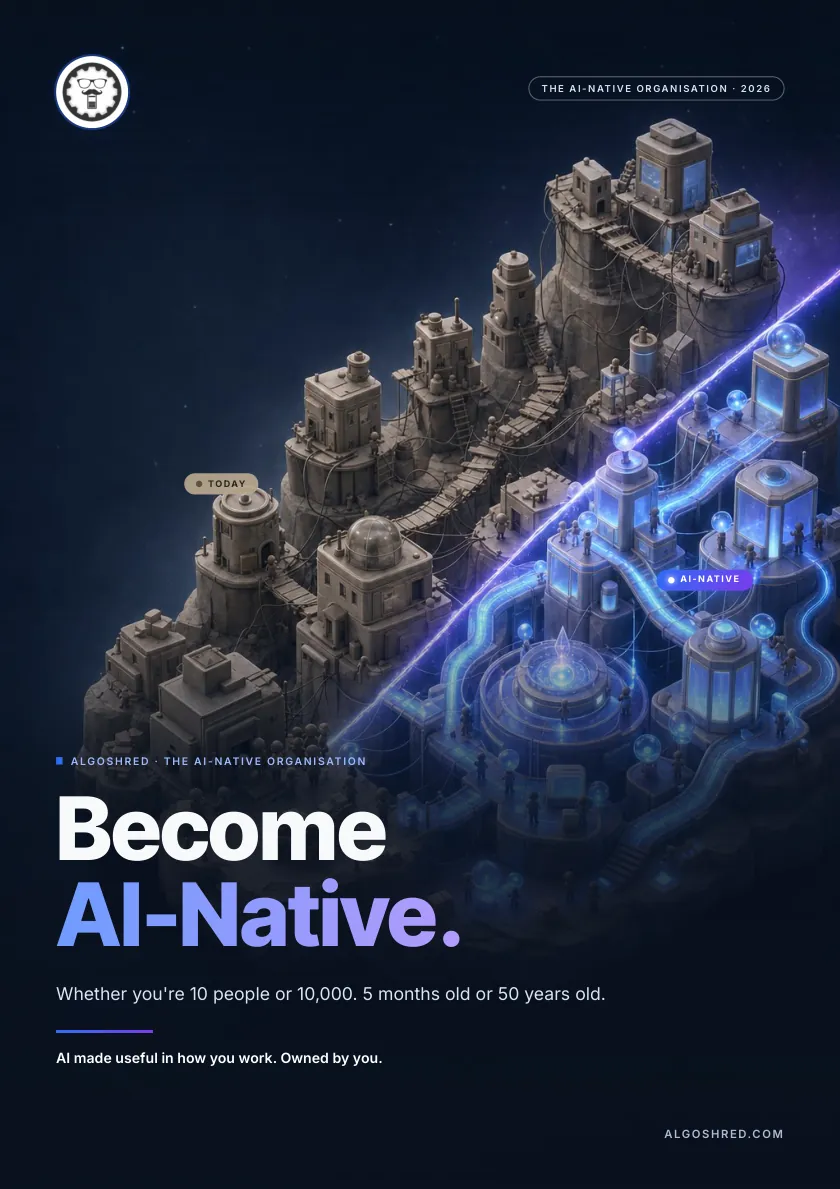
Whether you’re 10 people or 10,000. 5 months old or 50 years old.
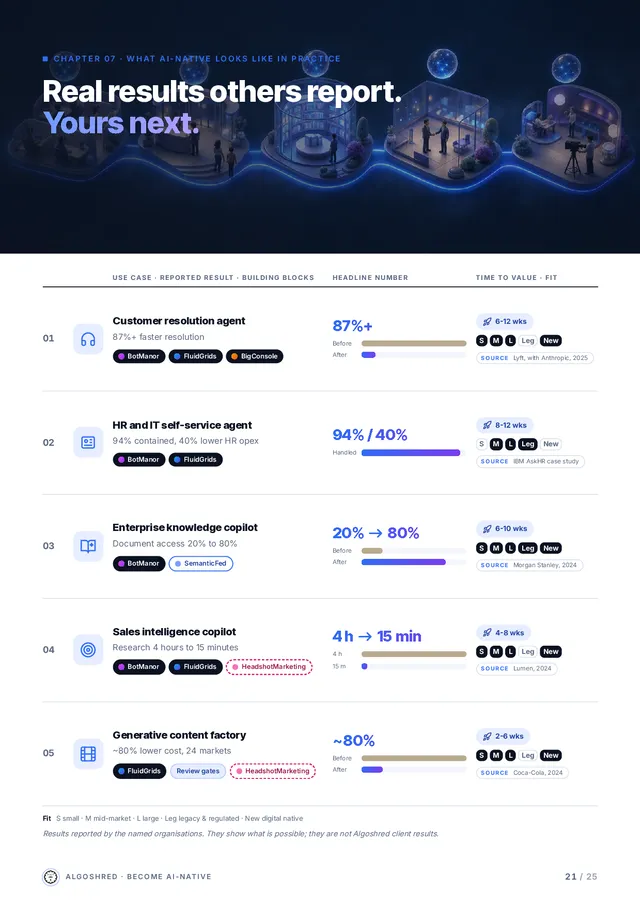
A 25-page field guide to making AI useful in how your organisation works: where value leaks today, what an AI-native company looks like layer by layer, and a path that fits your size.
View opens in your browser’s PDF reader. Download saves Algoshred-Become-AI-Native.pdf.
Watch · 2 min 45 sec
A short story about a sweet shop, a robot called Bolt and four simple ideas. No jargon, just what changes when AI is built into the way work happens.
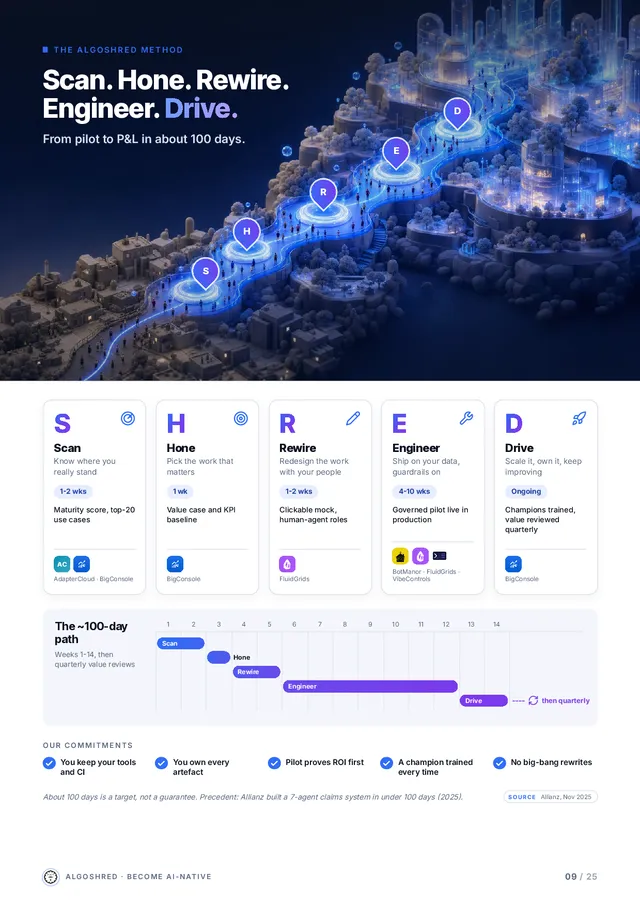
A focused path
We work in focused stages so your organisation can learn, make better choices and build confidence as it goes.
Listen to leaders and frontline teams, map the work and establish an honest baseline for change.
Select the opportunities that matter most, define sensible safeguards and agree how success will be assessed.
Shape improved journeys, responsibilities, information needs and user experiences before scaling anything.
Deliver focused capabilities, evaluate them in real conditions and improve them from evidence and feedback.
Strengthen governance, skills and operating routines so the organisation can continue to evolve with confidence.

The best first opportunities are visible, meaningful and shaped with the people who do the work. These are examples of where an AI-native approach can help.
What we help with
Choose a focused starting point, or bring the pieces together into a wider transformation.
Create a shared view of where AI can help, what must change first and how progress will be judged.
A practical direction that leaders and teams can act on.
Redesign roles, decision rights, ways of learning and human oversight for work that includes AI.
People know how responsibility changes, and where it does not.
Organise trusted data, business knowledge and access rules so AI has useful context without creating confusion.
Better answers built on information people can understand and trust.
Improve high-value journeys across teams, beginning with work that is visible, repeatable and worth simplifying.
Useful changes in day-to-day work, not isolated demonstrations.
Design the applications, assistants and connected tools that make AI dependable in real business processes.
AI capabilities designed around people, workflows and clear boundaries.
Put sensible safeguards around data, identity, decisions and accountability from the beginning.
A responsible way to move forward with confidence.
Explore how AI can improve customer experiences, services and new sources of value without losing the human relationship.
Clear opportunities worth testing with customers and teams.
Monitor how AI is used, learn from evidence and keep improving quality, cost and reliability over time.
A living capability that can adapt as needs and technology change.

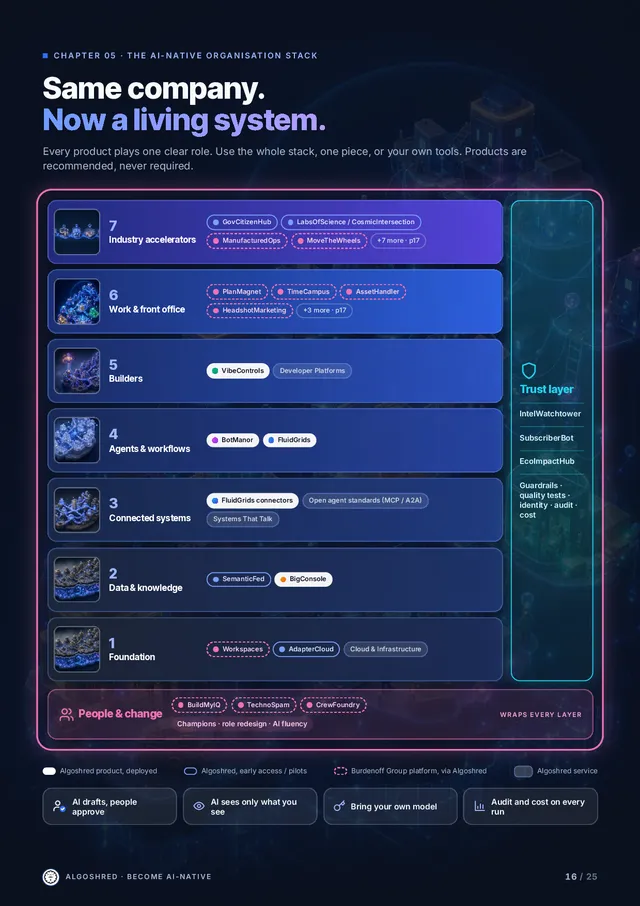
Foundations that connect
Strong AI organisations balance business direction, human capability, useful context, dependable delivery and responsible oversight.
Make AI part of the organisation’s priorities, not a side project.
Help people work with AI while keeping judgement, inclusion and accountability in view.
Make the right context available in a way people can understand and control.
Create AI-enabled services that fit the people using them and the decisions they support.
Keep AI safe, lawful, observable and worth the effort as it becomes part of normal operations.
Good to know
No. We start from your current reality. The first step is to understand where better ways of working can be created with the systems, information and people you already have.
No. Technology matters, but AI-native change is an organisational effort. Leaders, operational teams, customer-facing teams, risk owners and people teams all have a role.
We design for clear ownership, appropriate review and visible decision boundaries. AI should support people’s judgement, not obscure responsibility.
Start with an important workflow where the problem is understood, the people involved can help shape the change and there is a clear way to learn whether the change is useful.
Success is agreed before delivery and may include better service, clearer decisions, less repetitive work, stronger confidence or faster learning. The right measures depend on the work being improved.
Take the brochure and guides to share with colleagues, or start with the work, people and questions that matter most to you.