Developer Platforms · Helping app builders wait less

Let your app builders build, not wait.

A developer platform is one ready, shared setup for the people who build your apps, so they spend their day building instead of asking, waiting and setting things up from scratch.

Platform & developer engineering as a service

Vignesh T.V., CEO & CTO, Algoshred Technologies Pvt. Ltd.

From idea to customer

Who’s who in the story

In our story, Kofi and the other drivers are your app builders (developers), the race is getting work to your customers, Lento is the team that runs your shared tools, the ready pit is the developer platform, the bright, painted lane is your team’s usual way to build and release, the tool wall is where everyday tools are ready to take, and the check gate is the automatic checks every change goes through.

IdeaBuildChecksReleaseCustomers

Ask and wait · A place to build

The request joins the queue. The stopwatch keeps sweeping.

Keys to the live system: a person says yes to this one.

Ask and wait

  1. Idea: An idea is ready. First, a form to ask for somewhere to build it.
  2. A place to build: The request joins the queue. The stopwatch keeps sweeping.
  3. Checks: Checks are done by hand and saved up for the end.
  4. Release: The change waits for the next big release day, packed with everything else.
  5. Customers: Customers finally see it, bundled with many other changes.

Ready pit

  1. Idea: An idea is ready. A starting template is already on the wall.
  2. A place to build: A test copy of the app comes off the wall. Risky tools still need a person’s yes.
  3. Checks: The same automatic checks run on this change. Even the ready car stops here.
  4. Release: This one small change goes out on its own, to a few customers first.
  5. Customers: Customers can see it without waiting for the next big release, and it can be switched off if something looks wrong.

An illustration, not a measurement. Even the ready car stops at the check gate.

Watch · 2 min 18 sec

Developer Platforms: ready tools for app builders

Kofi is the fastest driver on the grid, stuck in the garage with a spoon for a wrench. A short story about one ready, shared pit, and why it lets the people who build your apps wait less.

Read the story instead
  1. NarratorKofi’s the fastest driver. So why is he stuck in the garage?
  2. KofiOur wrench is... a spoon.
  3. NarratorA real wrench means a form, and a queue for Lento.
  4. LentoNext... week.
  5. On screenLento = the team that runs your shared tools.
  6. NarratorEvery crew builds its own tools. Updates wait for one big, scary pit stop. Sound like your app builders?
  7. NarratorEveryone waits on Lento. He can’t be fast, but with everything ready, your app builders can be.
  8. NarratorThe drivers are your app builders. Their race? Getting work to customers.
  9. LentoLet’s build it.
  10. On screenNext season. Building it right takes time.
  11. NarratorHe watches the drivers, and builds one ready pit. There, the safe way is the easy way.
  12. NarratorThat’s a developer platform. Race day’s coming, so Lento leaves early for the flag.
  13. On screenLento: off to wave the flag. Leaving early.
  14. NarratorKofi takes the bright lane: your team’s usual way to build and release. Optional, but the tools and checks come ready.
  15. KofiAlready on it!
  16. NarratorKofi grabs a wrench. Everyday tools: no form, no queue. Risky tools still need Lento’s nod.
  17. NarratorHis car rolls through the check gate: new parts fitted and checked, automatically.
  18. KofiWhoa, loose bolt!
  19. NarratorCaught here, it’s a quick twist. Not a lost wheel.
  20. NarratorThe big, scary pit stop becomes small, ready stops, often.
  21. NarratorTry a new tyre for one lap. Wobbly? Put the old one back.
  22. On screenReplay: week one, before the ready pit.
  23. NarratorLento’s first try? A shiny new sign. Same old queue.
  24. NarratorA new tool alone didn’t fix it. Watching the drivers did.
  25. NarratorNew driver Zara? Kofi shows her the lane, and soon she’s off.
  26. NarratorRace day. When the start lights go out, Kofi takes off with everyone.
  27. KofiBye, spoon!
  28. NarratorLess waiting, more driving.
  29. NarratorAlgoshred helps. We listen, and find where your team gets stuck.
  30. NarratorWe set up one easy way to build and release, tools and checks ready. Your team keeps improving it.
  31. NarratorIs your fastest driver stuck in the garage? Visit algoshred.com, or write to contact@algoshred.com.

The idea in plain words

Four ideas, one ready pit

Each one in everyday words first, then the name experts use for it.

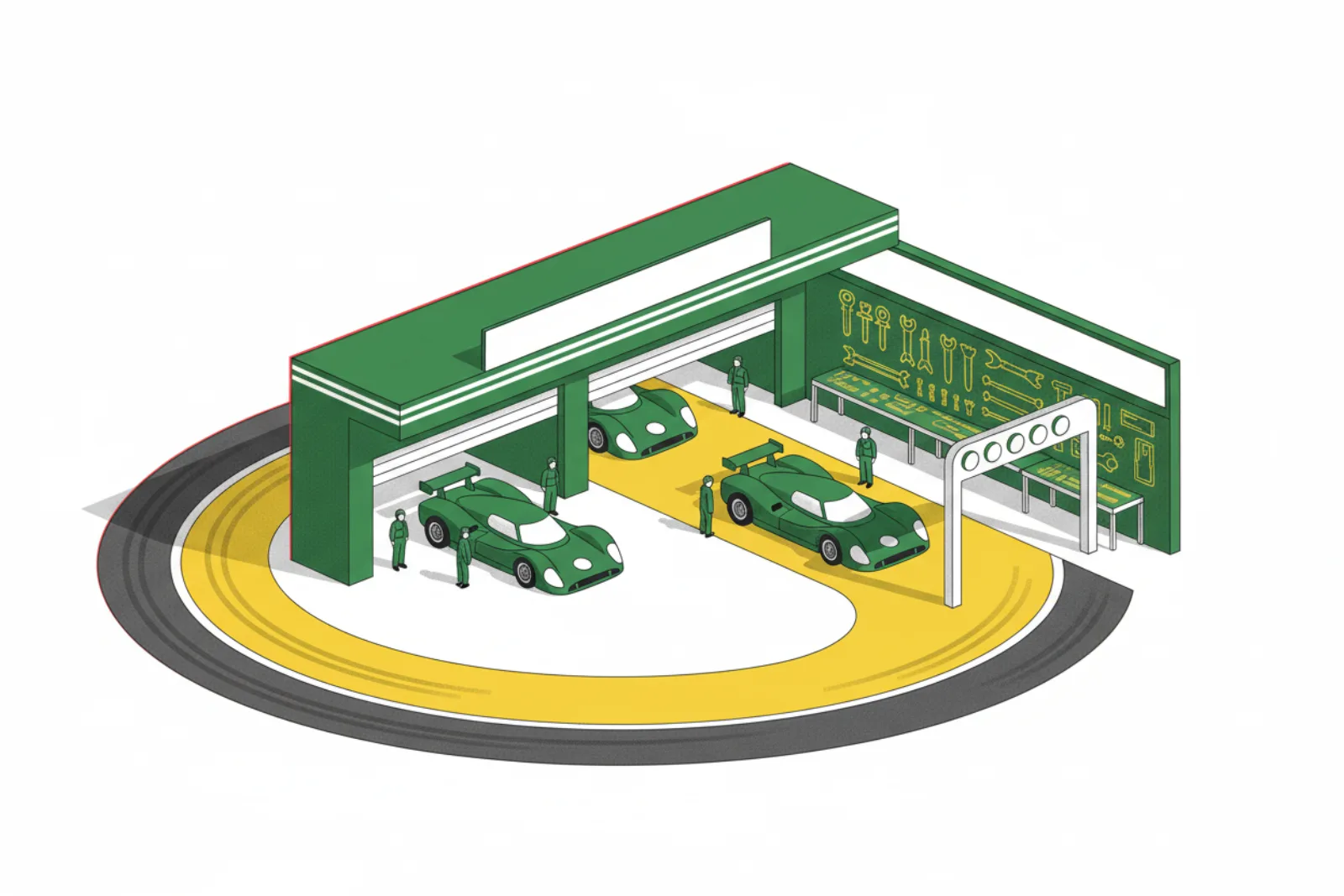
A tidy shared racing pit with a yellow lane painted out to the track, a tool wall and a check arch at the exit

Get the pit ready. Let them drive.

  1. 01

    One ready pit for every team

    Instead of each team building its own tools, one crew keeps a shared set ready and looked after, and listens to the people who use it.

    Experts call this: internal developer platform (IDP)

    Worth knowing: A platform helps only when it is the easier way for the people using it, so we build it with them.

  2. 02

    A painted lane for the common jobs

    For the jobs you do most, the quick way and the careful way become the same way: a ready-made start with the checks already in it.

    Experts call this: golden paths, paved roads

    Worth knowing: The painted lane is a recommendation, not a rule. Teams can step off it for unusual work.

    See where the painted lane stops
  3. 03

    Help yourself, within the lines

    Routine things hang on the wall for anyone to take, and the wall records who took what.

    Experts call this: self-service with guardrails, developer portal

    Worth knowing: Everyday tools: no form, no queue. Risky tools still need a person’s yes.

    See which tools still ask a person
  4. 04

    The same checks on every change, in small steps

    Each change is built and tested automatically and can go out in small steps, to a few customers first where that makes sense, with a way back for most changes.

    Experts call this: CI/CD (continuous integration and delivery), release engineering

    Worth knowing: Automatic checks catch many mistakes, not all of them. Small releases don’t replace testing, and some problems still get through.

    See small releases and their checks

See the difference

Pick a job. Watch the lane paint itself.

Choose something your team builds often. The painted lane shows what comes ready, and the one thing that still asks a person.

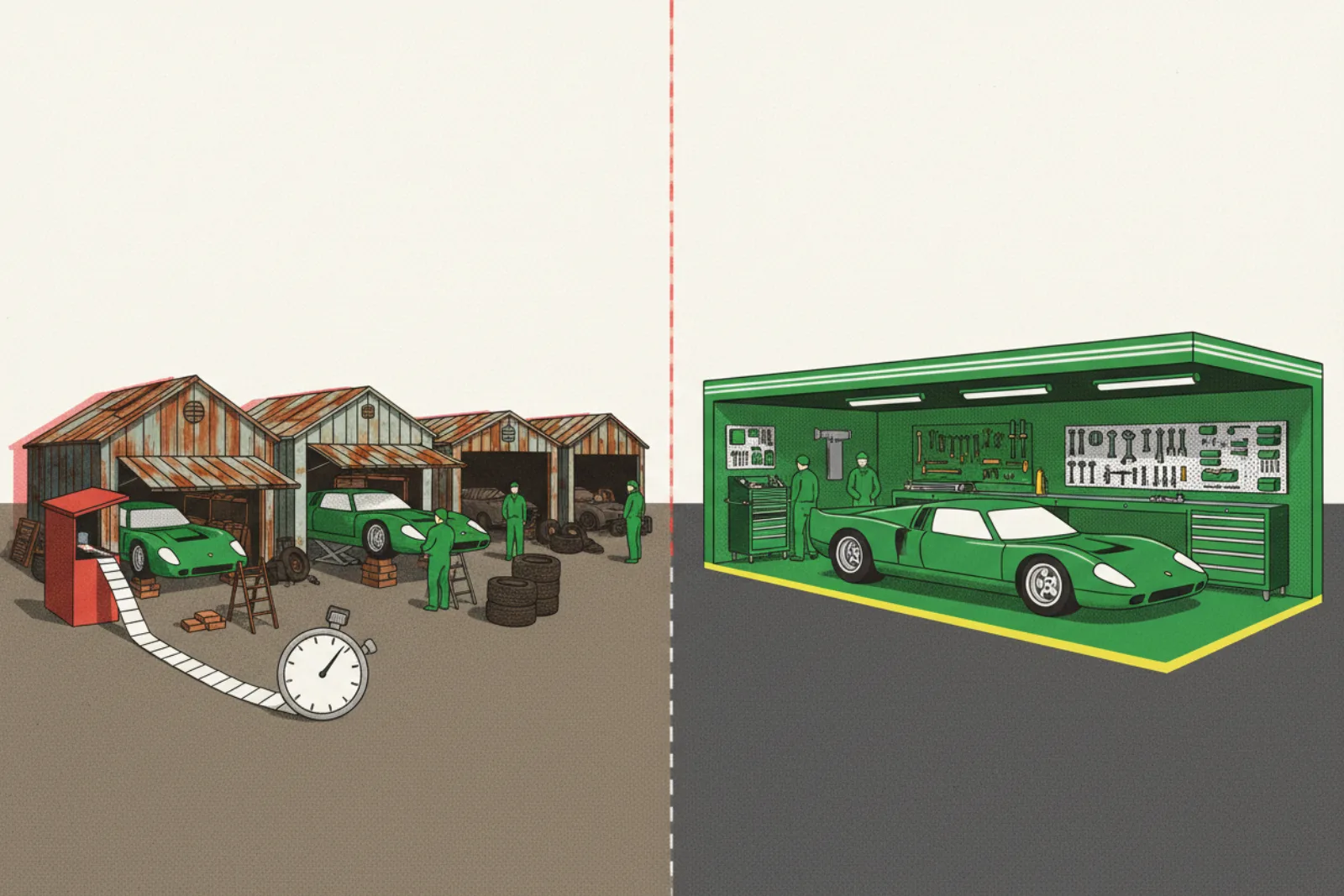
Cluttered, mismatched garages with a paper queue at a red hatch, beside one tidy shared pit with a painted lane
Every crew its own toolsOne ready pit
What is your team building?

Comes ready on the lane

  • A starting template for services
  • A place to try it, away from customers
  • The same automatic checks
  • A way to release and undo
  • A way to watch it once it runs
  • Team access, set up the house way

Still asks a person

Access to live customer records

Worth knowing: The painted lane is a recommendation, not a rule. Teams can step off it for unusual work.

Worth knowing: Everyday tools: no form, no queue. Risky tools still need a person’s yes.

Release rhythm

One big, scary pit stop, or small stops often?

Changes from several teams roll down the pit lane. Pick a rhythm, then see what happens when something breaks.

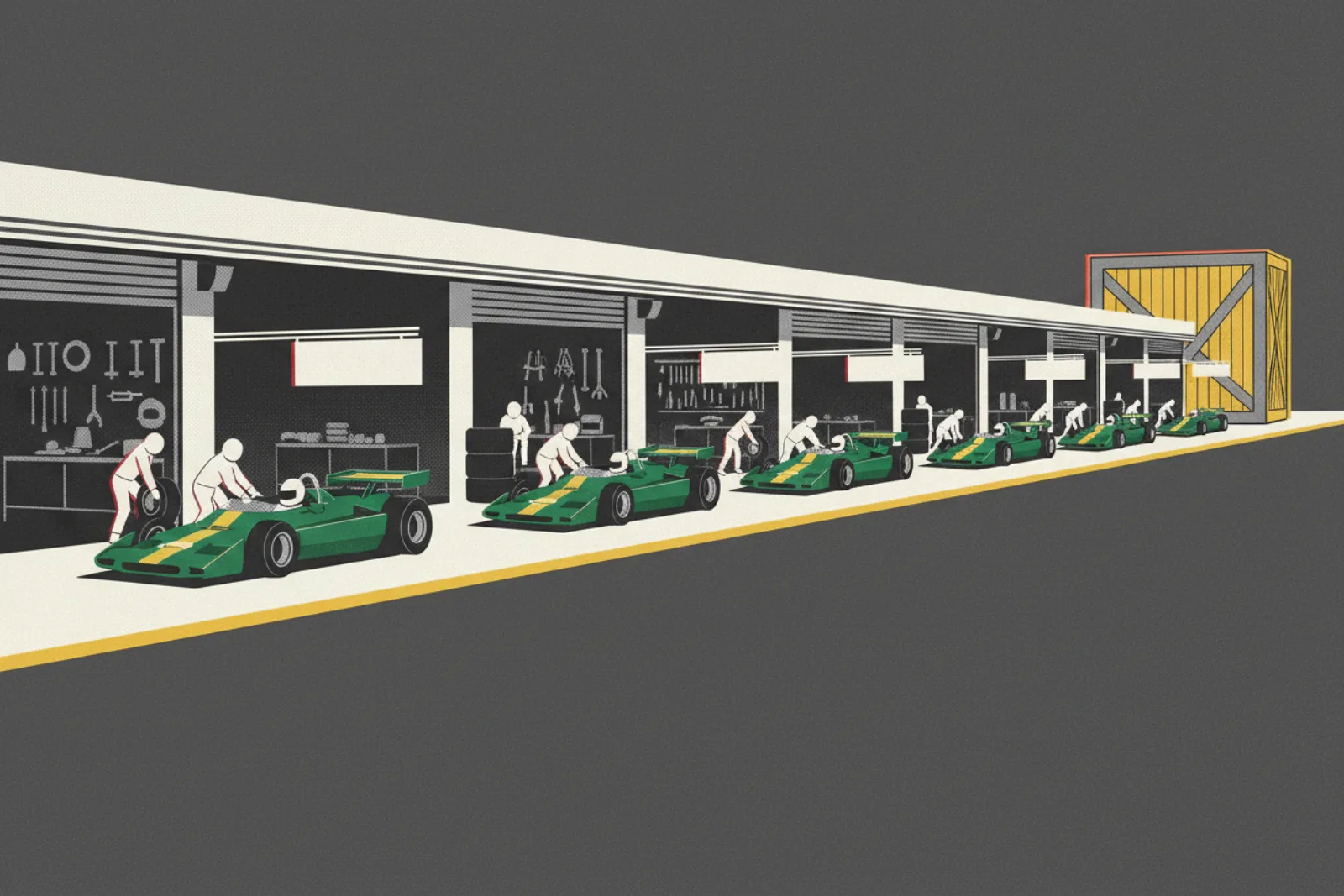
Many small, quick pit stops in a row along a yellow lane, with one huge crate of parts left at the far end
How often do changes go out?
release day

One big pit stop: Every change waits in one big crate for release day, then everything goes out together.

Worth knowing: Small, frequent releases are easier to check and to undo. They don’t replace testing, and some problems still get through.

Worth knowing: Automatic checks catch many mistakes, not all of them.

Sounds familiar?

The signs your app builders are stuck in the garage

If any of these ring true, your builders are probably spending more time waiting than building.

  • “Our best people spend more time waiting on requests than building.”
  • “Every team set up its own tools, and none of them match.”
  • “Release day is a big, nervous event.”
  • “Something broke after the update, and nobody could tell which change did it.”
  • “New joiners spend their first weeks asking who to ask.”
  • “We bought a shiny new tool, and the waiting stayed the same.”

A quick self-check

Seven plain questions. Answer what you can, and we’ll point to where we’d look first.

01Could a new teammate put a small, safe change live early on, from written steps rather than by asking around?
02Can a team get a test copy of the app without filing a request and waiting?
03Can routine requests go ahead without waiting for one person to approve each one?
04Does every change go through the same automatic checks, whoever made it?
05Is release day an ordinary day rather than an event?
06If a release goes wrong, can you undo just that change quickly?
07Have you asked your builders, recently, where their work waits?

Where we’d look first

Answer any question and the places we’d look first appear here.

Talk it through

Answer “No” or “Not sure” to any question to email the list.

Nothing is stored or sent unless you choose to email it.

What we help with

From following one change to a pit your team runs

Eight pieces of work. Start with one lane, or bring them together into one shared setup for every team.

Listen and plan

Where your builders get stuck, and what to fix first.

Follow one change from idea to customer

A map of where the waits and hand-offs are, and which to fix first.

We ride along with a real change, talk to the people who build, and run a short survey about waiting, interruptions and confusion.

Experts call this: developer experience review, value-stream mapping
A crew that treats your builders as customers

A platform with an owner and a plan that follows what builders ask for.

Who looks after the shared setup, how they hear from builders, what they build first and how it is funded.

Experts call this: platform as a product, team topologies

Also in this area

  • Developer journey mapping: following real changes from idea to customer
  • Builder surveys on waiting, interruptions and confusion
  • A plan for the platform, and for who looks after it
  • A plan that starts with the smallest useful platform

Pave the paths

Ready-made starting points with the checks already in them.

Ready-made starting points for common jobs

New work starts the house way, with the checks built in.

Templates for the jobs you do most, such as a new web service or a scheduled report, with checks, a view of how it is running and access set up the house way.

Experts call this: golden paths, software templates

Also in this area

  • Golden-path templates for common jobs
  • Help-yourself test copies of the app
  • Safety, cost and policy checks built into the paths

Open the front door

One place to find things, take things and see who looks after them.

A help-yourself tool wall and front door

Routine requests no longer have to wait in a queue.

One place to find what exists and who looks after it, and to pick up routine things like a test copy of the app. A person still approves the risky ones.

Experts call this: developer portal, service catalogue, self-service

Also in this area

  • A developer portal and service catalogue (who looks after what)
  • Written guides kept next to the work they describe
  • Scorecards: a simple checklist of how each service measures up to the house rules

Ship small and measure

Small, checked releases, and a plain view of whether it is getting smoother.

The same automatic checks on every change

Problems often show up earlier, while they are small.

Build, test and safety checks that run on every change, with less waiting on them and clearer messages when they fail.

Experts call this: continuous integration (CI), build pipelines

Small releases you can roll out and undo

Release day can become an ordinary day.

Small changes, on/off switches for new features, rollouts to a few customers first where that makes sense, and a way back for most changes.

Experts call this: continuous delivery (CD), release engineering, feature flags, gradual rollout

Measuring the waits, and asking the builders

You can see whether it is getting smoother, in your own numbers.

A few plain delivery measures plus a regular builder survey, agreed with you at the start. Experts call what the survey asks about developer experience; in plain words: less waiting, fewer interruptions, less confusion.

Experts call this: DORA measures (four standard delivery measures), developer experience surveys

Room for AI helpers on the same road

AI helpers that go through the same checks as everyone else, which catch many mistakes, not all, plus a person’s review.

Giving coding assistants and agents (AI helpers that take steps on their own) the same paths, the same written instructions, checks and limits as people, plus a person reviewing what they write.

Experts call this: AI-assisted engineering, agent guardrails

Also in this area

  • Automatic build and test steps that keep builders waiting less and explain failures clearly (continuous integration, CI: every change is built and tested automatically)
  • Feature switches and gradual rollouts with a way back (continuous delivery, CD: every checked change is ready to release)
  • Plain delivery measures plus builder feedback
  • Room for AI helpers inside the same checks

For your technical team: we work with what you already use, for example GitHub Actions, GitLab CI, Jenkins, Argo CD, Flux, Backstage, Port, Terraform, OpenTofu, Crossplane, Kubernetes and OpenFeature.

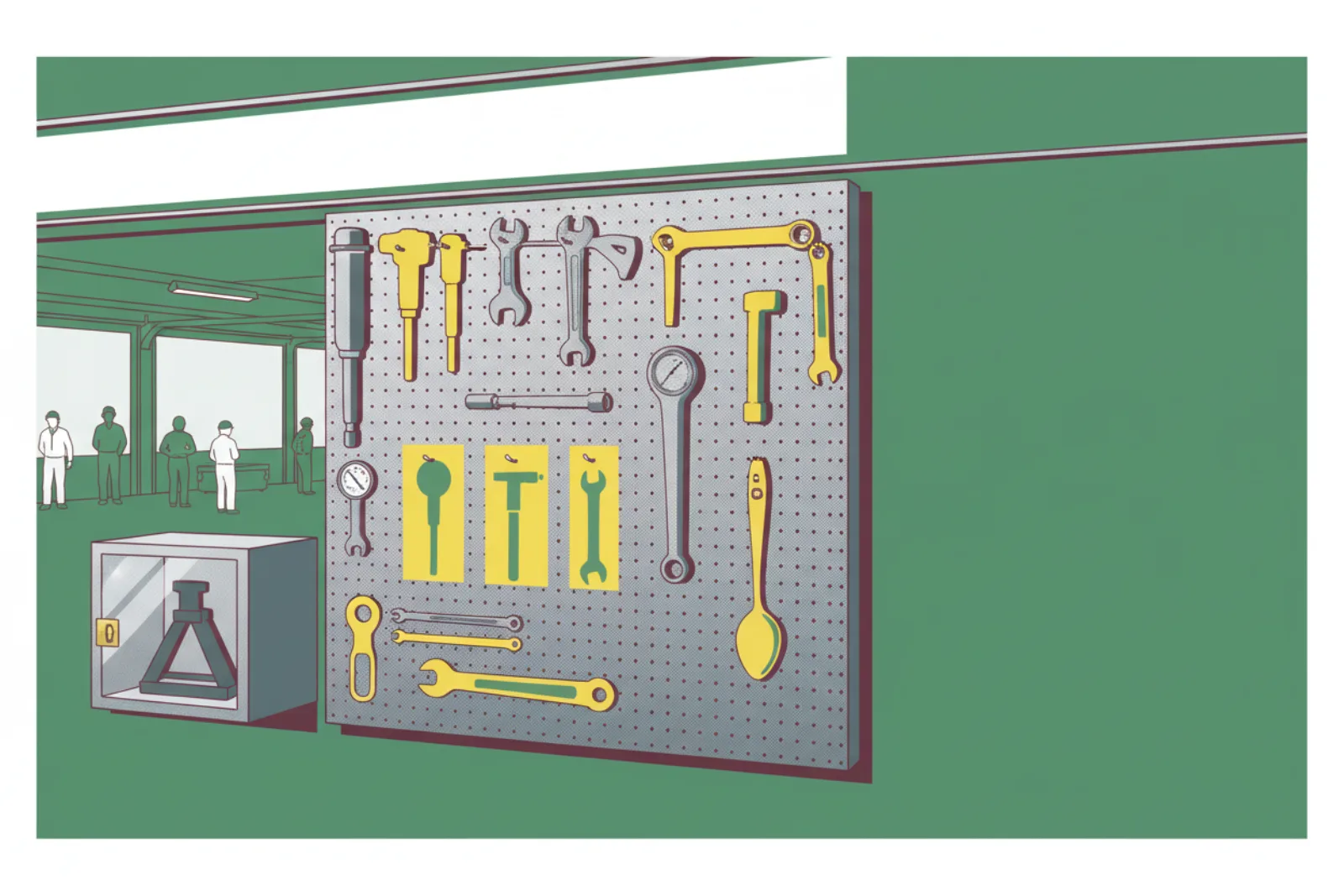
A pegboard tool wall where each tool hangs on its painted outline, beside a small glass cabinet that stays closed

Ways to start

Follow one change

A ride-along with one real change, and a map of where it waits.

First painted lane

One ready-made starting point for your most common job, built with one team.

Release-day tune-up

Help one product start moving from big, rare releases towards small ones you can undo.

Ask us to follow one change

How we work

Listen first, then paint one lane at a time

Five steps in plain words, from the first ride-along to your team running it.

  1. Listen

    Listen to the people who build

    We ride along with one real change, from idea to customers, and talk to the people who build. A short survey asks where work waits, what interrupts and what confuses.

  2. Stuck spots

    Find the stuck spots

    We mark every wait, hand-off and “ask the one person who knows” on one map. Then we agree with you what smoother means, and which stuck spot to fix first.

  3. One lane

    Paint one lane

    We build the smallest useful platform for your most common job, with one pilot team (the first team to try it), even if part of it is good written steps. Experts call this the thinnest viable platform.

  4. Tool wall

    Open the tool wall

    Routine requests come within reach through one front door, and the wall records who took what. A person still says yes to the risky ones.

  5. Your team runs it

    Your team keeps improving it

    We hand over the know-how so your team can keep improving the platform. When a new kind of job keeps coming up, we help paint the next lane if you want us to.

What you get along the way

  • A map of one change from idea to customer, with every wait marked
  • A short list of stuck spots to fix first, agreed with you
  • One painted lane for your most common job, built with a pilot team
  • Written steps your team can follow and change
  • A few plain measures and a builder survey, agreed at the start
  • Hand-over sessions for the people who will look after the platform
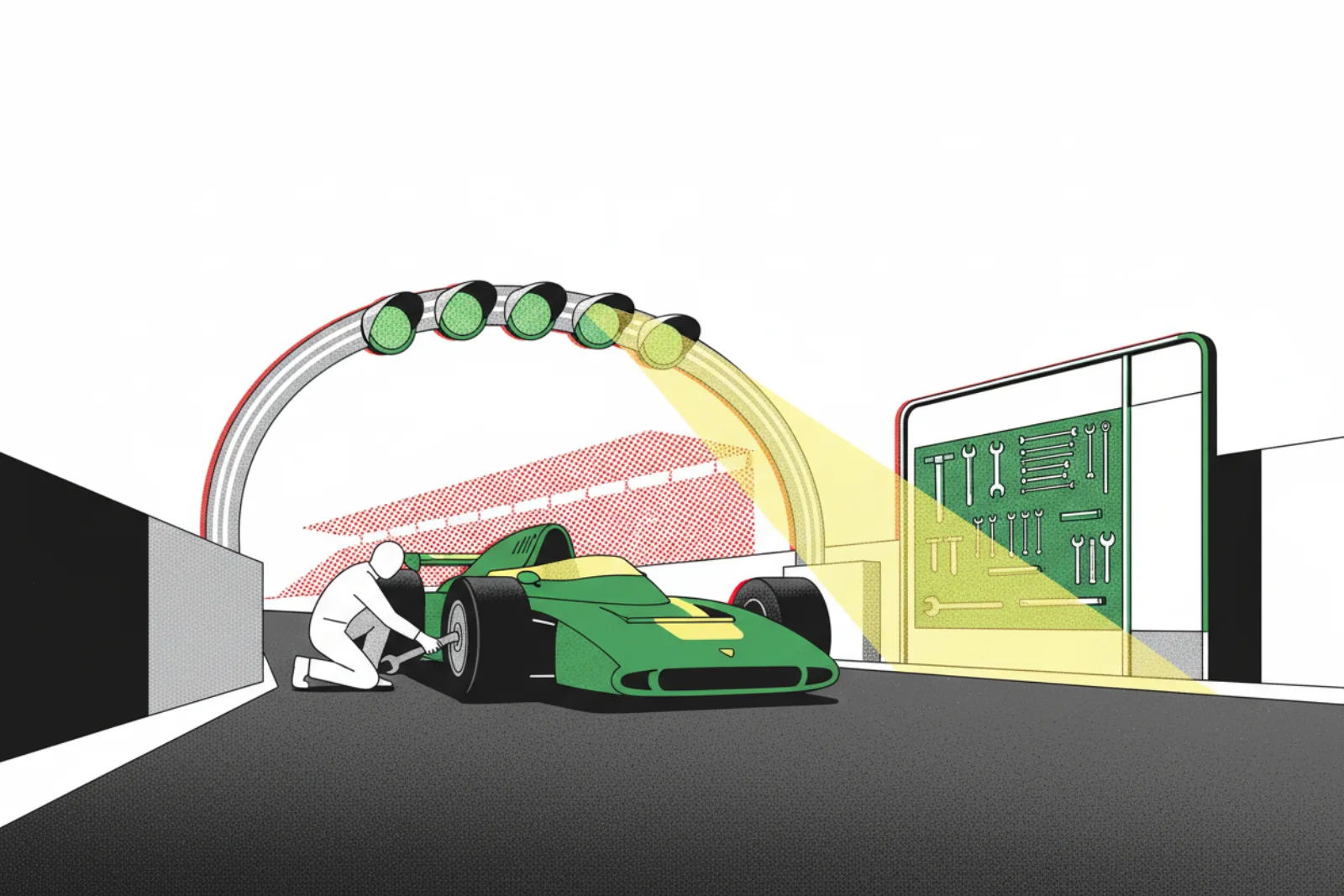
A race car rolling under a chrome check arch while a crew member tightens one wheel nut

Where it becomes real

Illustrative examples, not customer stories: the kind of work this approach suits.

Retail and e-commerce
A small change to the checkout goes out to a few shoppers first, through the same checks as every other change, and can be switched off if something looks wrong.
Financial services
For example, each new service could start from a template with your own safety and record-keeping checks already in it, so reviews look at the work, not the setup.
SaaS and product companies
A new joiner picks a ready-made path, gets a test copy of the app without filing a request, and ships a small, checked change early on.
Healthcare
For example, teams could help themselves to routine test setups, while anything touching patient records waits for a named person’s approval.
Media and publishing
Many small releases replace one big Friday launch, so when something breaks it is clear which change did it.
Any team using AI coding helpers
Code written with AI help goes through the same paths and checks as everyone else’s, plus a person reviewing it, so speed doesn’t skip the safety nets.

Good to know

Questions we are often asked

Plain answers to what owners and tech leads ask first. Something else on your mind?

Ask us directly

What is a developer platform, in plain words?

A shared, ready-to-use setup for the people who build your software, with ready-made starting points, help-yourself tools and the same checks on every change.

Is this the same as DevOps?

It grows out of it. DevOps asks builders and operators (the people who keep systems running) to work together. A platform packages what they agree on into something every team can pick up and use.

Do we need a big team, or Kubernetes (a popular system for running apps), to start?

No. The first version can be a few good written paths and some automation on tools you already have. It grows only when it needs to.

Won’t it take freedom away from our teams?

Painted lanes are the easy option, not a fence. Teams can step off them for unusual work, and the common detours become new lanes.

How do you make sure app builders want to use it?

We build it with them, start with what slows them down most, treat them as customers and keep asking. If a path isn’t easier than their own way, we fix the path.

Do we have to replace our current tools?

No. We start from what you have, including the build and release tools you already run, and connect it. A portal or new tool comes in only where it helps.

How will we know it’s working?

We agree a few measures with you at the start, in plain words: how long finished changes wait before customers get them, how often you release, how often a release needs a rescue, and how quickly you recover (experts call these DORA measures). We also ask the builders. The numbers stay with you, and we make no promises about them.

How long does it take, and what happens after?

It depends on your teams and what you already have. We start with one ride-along, then agree the next step together, one lane at a time. Afterwards your platform crew keeps the paths, the written steps and the measures, and we train them to run and grow it. We can stay on to help paint the next lanes if you prefer.

Heard it before?

Myths, answered

Myth: “A platform is a tool you buy.”

Answer: It’s a way of working plus a shared setup built around your teams. A portal or tool is just the front door. In our story, a new tool alone didn’t fix it; watching the drivers did.

Myth: “We don’t have a platform, so we don’t need one.”

Answer: You already have one: forms, queues and the one person who knows. The question is whether it’s a good one.

Myth: “Releasing less often is safer.”

Answer: One big release mixes many changes, so when something breaks it is hard to tell which one did it. Small releases are easier to check and to put back. They still need testing, and some problems still get through.

Myth: “It slows teams down; it’s a cage.”

Answer: The painted lane wins because it is the easy way, not because anyone is forced onto it. Unusual work can still step off it.

Myth: “Self-service means anything goes.”

Answer: Routine things hang on the wall, and the wall records who took what. The risky tools stay in a locked cabinet, and a person says yes to each one.

Myth: “Build it once and you’re done.”

Answer: It’s a product: start small, listen to your builders and keep improving it. It’s a journey, not a quick fix: we build it with your teams, one lane at a time.

Is your fastest driver stuck in the garage?

Take the guides to share with your team, or tell us what your team builds and where work seems to wait. We’ll set up a short call to pick one real change to follow, and suggest where to start.

Or write to contact@algoshred.com