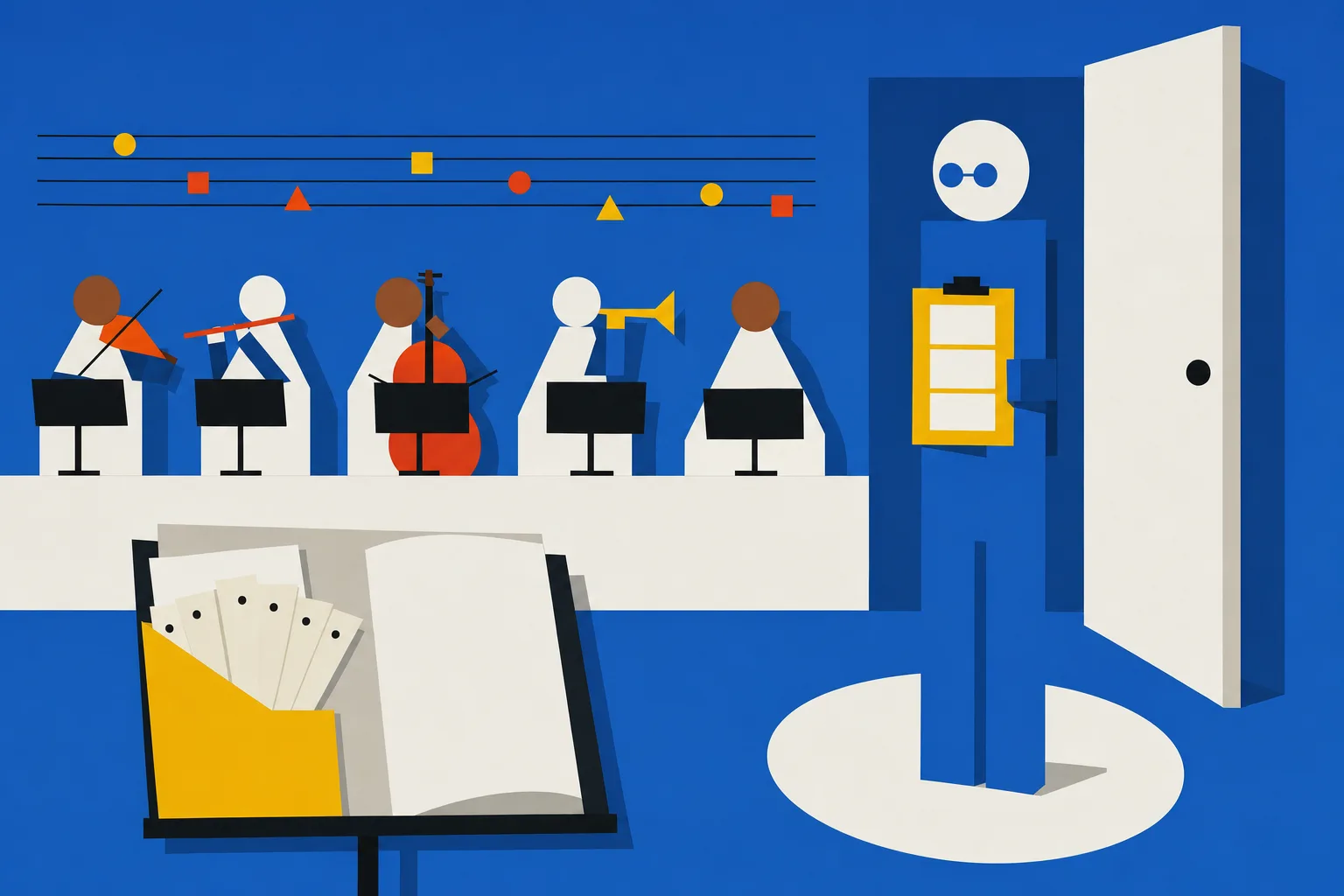
Architecture & Governance · One book, everyone in time

Capable teams, each playing its own tune? One book gets everyone in time.

Architecture and governance means one shared map of which software does what and how it connects, plus a few agreed house rules that are checked while the work happens, not the night before launch.

Everyone in time

Who’s who in the story

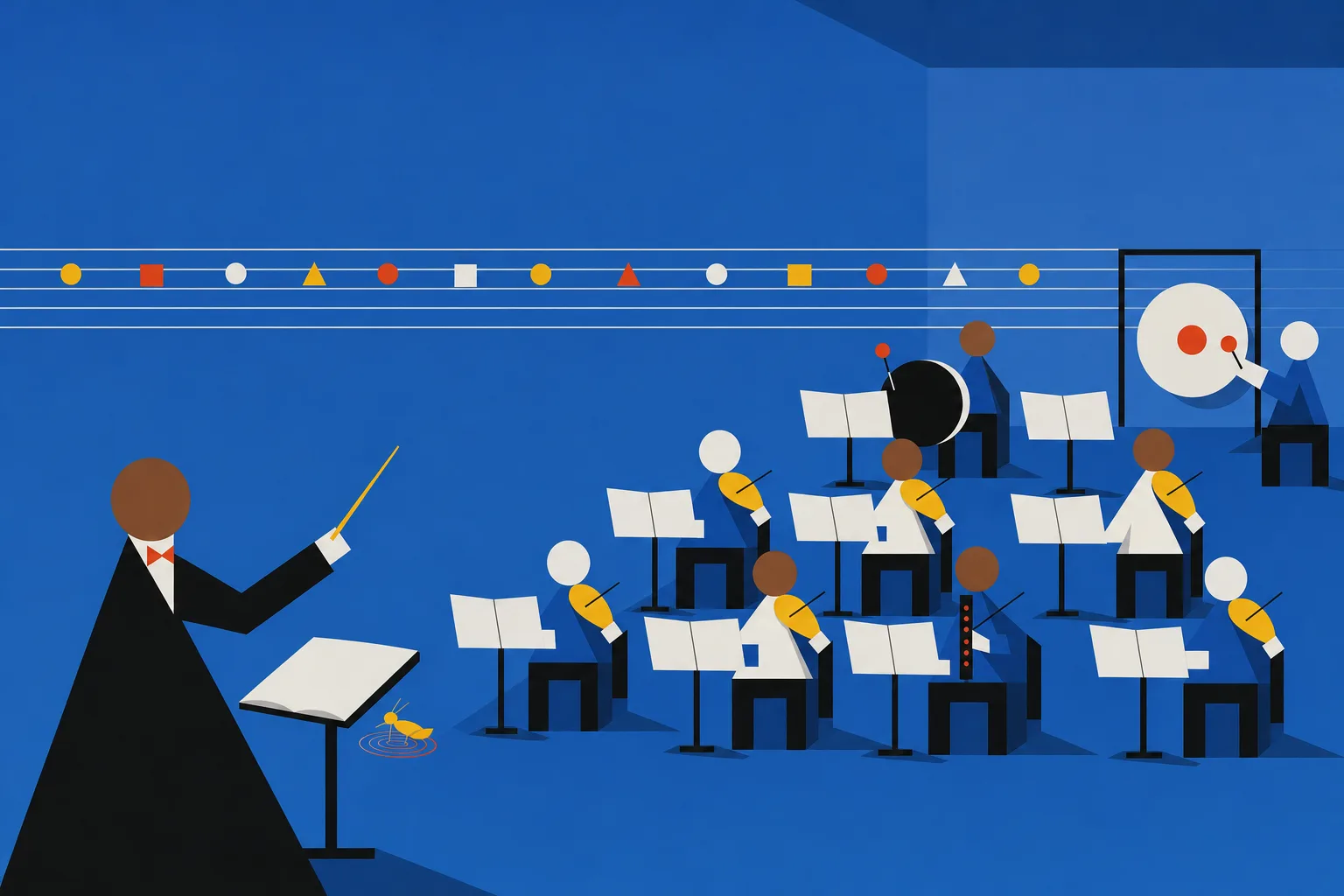
In our story, the orchestra is your teams and the software each one runs, the music book is one shared map of which software does what and how it connects, Sione, the young conductor, is you or your tech lead, Tock the cricket’s shared beat is the few choices everyone agrees, the listening gadget on each stand is an automatic check, the safety inspector stands for the outside rules your business must follow (at work, your auditor), and the oboe player’s kazoo is a tool nobody agreed on.

WebHelpBillsStock
How does the orchestra play?
Pick a section

Strings, the website team · Everyone on their own tune

“We picked our own tools and our own way of storing customer details.”

Everyone on their own tune

  • Strings, the website team: We picked our own tools and our own way of storing customer details.
  • Woodwind, the customer-service team: We added a new chat tool, and nobody checked how it fits.
  • Brass, the finance team: We pay for a tool that does the same job as two others.
  • Percussion, the warehouse team: We built our own stock list, and it doesn’t match the website’s.

One book, everyone in time

  • Strings, the website team: We use the shared map, and our part plugs into the rest.
  • Woodwind, the customer-service team: New tools get a quick look first, so they fit with the rest.
  • Brass, the finance team: The map shows the overlap, so we agree which tool to keep.
  • Percussion, the warehouse team: Our stock list is on the map, so the website knows where to look.

An illustration, not a measurement.

Watch · 2 min 22 sec

Architecture & Governance: one book, everyone in time

Sione’s youth orchestra is a mess: everyone’s playing their own tune, and the safety inspector checks just before the concert. A short story about one shared map, a few house rules and checks that run as you go.

Read the story instead
  1. NarratorRehearsal is a mess. Everyone’s playing their own tune.
  2. NarratorNobody said what’s allowed, so the oboe player brings a kazoo.
  3. NarratorThe safety inspector checks fire exits and noise just before the concert. Fail, no show.
  4. On screenFail? No show.
  5. NarratorYour software teams? Each builds its own way, and rules get checked the night before launch.
  6. NarratorWhat helps: one shared book, a few house rules, checked as you go. At work: architecture and governance.
  7. On screenConductor’s note: architecture and governance.
  8. NarratorConductor Sione hands out one music book: how every part fits.
  9. NarratorAt work: one map of which software does what, and how it connects. New projects plan to fit.
  10. On screenConductor’s note: enterprise & solution architecture.
  11. NarratorTock the cricket chirps one shared beat, so everyone keeps time.
  12. TockOne beat. Keep up.
  13. NarratorYour teams agree a few choices: which tools, and where customer details are kept.
  14. On screenConductor’s note: standards.
  15. NarratorEach group decides small things, and writes down why.
  16. TockWhy? Sounded nicer.
  17. On screenConductor’s note: decision records.
  18. NarratorA gadget on every stand listens for wrong notes. A bit off, it blinks. Way off, it asks Sione. At work, that’s an automatic check.
  19. SioneKazoo? Fine. Encore only.
  20. NarratorMany rules can run each time someone changes the software.
  21. On screenWay off: ask a person.
  22. On screenConductor’s note: policy as code.
  23. NarratorSo the inspector’s questions get answered every week, not crammed the night before.
  24. NarratorEach check gets logged for your auditor.
  25. On screenConductor’s note: compliance.
  26. NarratorAnything new answers three questions. Does it fit, what does it replace, what if it breaks?
  27. On screenConductor’s note: technology governance & risk.
  28. NarratorSione gets keen: a thousand rules. The orchestra falls asleep by rule forty.
  29. TockAhh. Silence.
  30. NarratorSurprise visit, mid-rehearsal. The inspector asks. Sione just opens the book.
  31. SioneWait. We sound good?
  32. TockSame beat. Finally.
  33. NarratorAlgoshred maps which software does what, with your teams.
  34. NarratorWe help agree your rules, set up checks, and coach your people as they go.
  35. NarratorEveryone in time yet? Visit algoshred.com, or write to contact@algoshred.com.

The idea in plain words

Four ideas, one book

Each one in everyday words first, then the name experts use for it.

A geometric youth orchestra rehearsing in neat rows, each player with the same open book, staff lines running across the wall

One book, everyone in time.

  1. 01

    One shared map of which software does what

    One current map of your software, who looks after each piece and how they connect. Each team zooms into its part, and new projects plan to fit before they start.

    Experts call this: enterprise architecture, solution architecture

    Worth knowing: It’s a journey, not a quick fix: we start with one map and one rule, and build from there with your teams.

  2. 02

    A few agreed choices, and the reason written down

    Everyone agrees a short list of choices, such as which tools to use for common jobs and where customer details are kept. Each group decides its small things and writes down why.

    Experts call this: standards, principles, architecture decision records

    Worth knowing: Teams can make a call after asking the people the decision affects; asking is not the same as everyone agreeing. Writing down why means fewer old arguments come back, not none.

  3. 03

    House rules checked as you go

    The rules that matter most are written so a computer can check them each time someone changes the software. A bit off: a hint. Way off: a person decides. A few big rules simply stop it. You set, rule by rule, which of the three a slip gets.

    Experts call this: policy as code, guardrails, continuous compliance

    Worth knowing: Automatic checks catch many problems, not all of them. Only rules written so a computer can read them can be checked this way, and people still make the hard calls. Most rules start as hints; only a few become a firm stop.

    See how strict each rule is
  4. 04

    Three questions for anything new

    Before a new tool or supplier joins: does it fit, what does it replace, what if it breaks? The pieces you already rely on get a plan B too.

    Experts call this: technology governance, technology risk

See the difference

Set how strict each house rule is

A small gadget on every stand listens for wrong notes. A bit off, it blinks. Way off, it asks a person. A few big rules just say stop. In practice you set, rule by rule, whether a slip gets a hint, a person’s look or a stop.

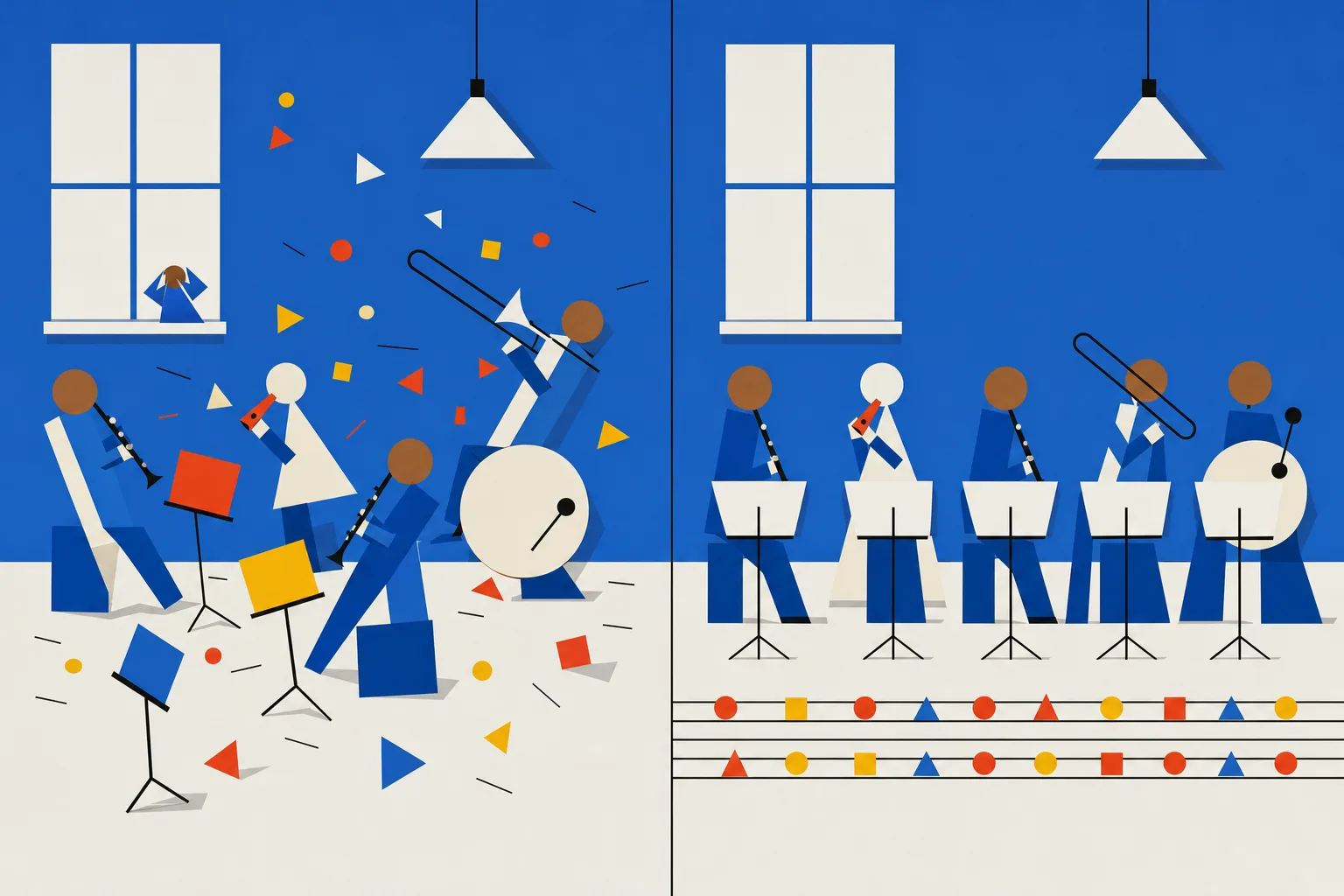
Left, players scattered off the grid with broken staff lines; right, the same players in neat rows reading one shared book
Own tuneOne book
Draft one

Each new system is added to the shared map, with a named owner

In the orchestra

Play from the shared book

At work

Each new system is added to the shared map, with a named owner

The gadget blinks: this new system isn’t on the map yet. The work carries on.

We’d usually start this one at: Hint. Easy to put right and low risk, so a reminder is usually enough.

Use the agreed tools for common jobs

In the orchestra

Keep to the shared beat

At work

Use the agreed tools for common jobs

The gadget blinks: there is an agreed tool for this job. The team can still choose.

We’d usually start this one at: Hint. Teams sometimes have a good reason to differ, so a nudge beats a wall.

Name things the agreed way, so others can find them

In the orchestra

Label your part the agreed way, so anyone can find it

At work

Name things the agreed way, so others can find them

The gadget blinks and suggests the agreed name.

We’d usually start this one at: Hint. A naming slip is quick to fix, so a gentle blink is plenty.

A big design choice gets a short note saying why

In the orchestra

Pencil a note when your group changes a part

At work

A big design choice gets a short note saying why

The gadget blinks: a short note saying why would help the next team.

We’d usually start this one at: Hint. The note matters most later, so a reminder at the time is usually enough.

A new outside tool or supplier gets a quick look from a named person

In the orchestra

A new instrument asks Sione first

At work

A new outside tool or supplier gets a quick look from a named person

A named person asks the three questions: does it fit, what does it replace, what if it breaks?

We’d usually start this one at: Ask a person. Something new can touch a lot, so a person takes a quick look before it joins.

Customer details are kept where we agreed to keep them

In the orchestra

Each section keeps its sheet music on its own agreed shelf

At work

Customer details are kept where we agreed to keep them

The change is held: customer details stay where we agreed.

We’d usually start this one at: Stop. It protects your customers and the promises you made, so it is a firm stop. Where a law sets the place, the rule follows the law, not a lower setting.

No passwords written into the code

In the orchestra

No spare key taped to the stage door

At work

No passwords written into the code

The change is held until the password is taken out.

We’d usually start this one at: Stop. A password in the code can be copied by anyone who sees it, so this one stops.

Worth knowing: Most rules start as hints; only a few become a firm stop.

Worth knowing: Laws and regulators’ rules are not optional; “few and clear” is about your own house rules.

Checked as you go

When does the inspector get her answers?

Rehearsal runs week after week. Pick when the rules get checked, then let the inspector drop in unannounced.

An inspector figure stepping into a rehearsal while an open book shows a folder of small records clipped inside its cover
When do the rules get checked?
FirstNext weekWeek afterDressNight before????Checks
When does she drop in?

Dress rehearsal: Still nothing written down.

Checked the night before

  1. First rehearsal: Everyone plays. Nobody checks anything yet.
  2. Next week: A note is a bit off. Nobody notices.
  3. The week after: The questions keep piling up, unanswered.
  4. Dress rehearsal: Still nothing written down.
  5. The night before the concert: Everyone digs through old emails to answer every question at once.

Surprise visit. Nothing is ready yet: everyone starts digging through old emails.

Checked as you go

  1. First rehearsal: The gadgets listen from the first note, and the first check goes in the folder.
  2. Next week: A note is a bit off. The gadget blinks, and it’s put right while it’s small.
  3. The week after: Another week of checks goes in the folder.
  4. Dress rehearsal: The record keeps building as the work happens.
  5. The night before the concert: An ordinary evening. The record is already in the book.

Surprise visit. Sione just opens the book: the record is clipped inside. The inspector still reads it herself and decides.

Worth knowing: Checks leave a record of what was looked at. That record is a head start, not a certificate: your auditors still decide.

Sounds familiar?

The signs your teams are each playing their own tune

If any of these ring true, a shared map and a few clear house rules are probably overdue.

  • “Every team picked its own tools, and now nothing quite fits together.”
  • “Nobody can draw how our systems connect, or the drawing is years old.”
  • “We pay for several tools that do the same job.”
  • “Our house rules live in a long document, and every reviewer reads it differently.”
  • “We find out we broke a rule the night before launch, or at review time.”
  • “Nobody remembers why we chose this, so the same argument keeps coming back.”

A quick self-check

Seven plain questions. Answer what you can, and we’ll point to where we’d look first.

01Could someone draw, on one sheet, how your main systems connect, and would others agree it’s current?
02Do you know which of your tools do the same job?
03Does a new project check how it fits the rest before it starts building?
04Could a new teammate find your house rules, and are there few enough to follow?
05When a team picks a new tool or design, is the reason written down?
06Are your most important house rules checked while work happens, rather than only at review time?
07If a reviewer asked today, could you show what was checked, without a last-minute dig?

Where we’d look first

Answer any question and the places we’d look first appear here.

Talk it through

Answer “No” or “Not sure” to any question to email the list.

Nothing is stored or sent unless you choose to email it.

What we help with

From one map to checks your teams run

Eight pieces of work. Start with one map or one rule, and build from there.

See the whole

One map of what you run and where you are heading.

One map of which software does what

A shared, current map your teams can read and keep up to date.

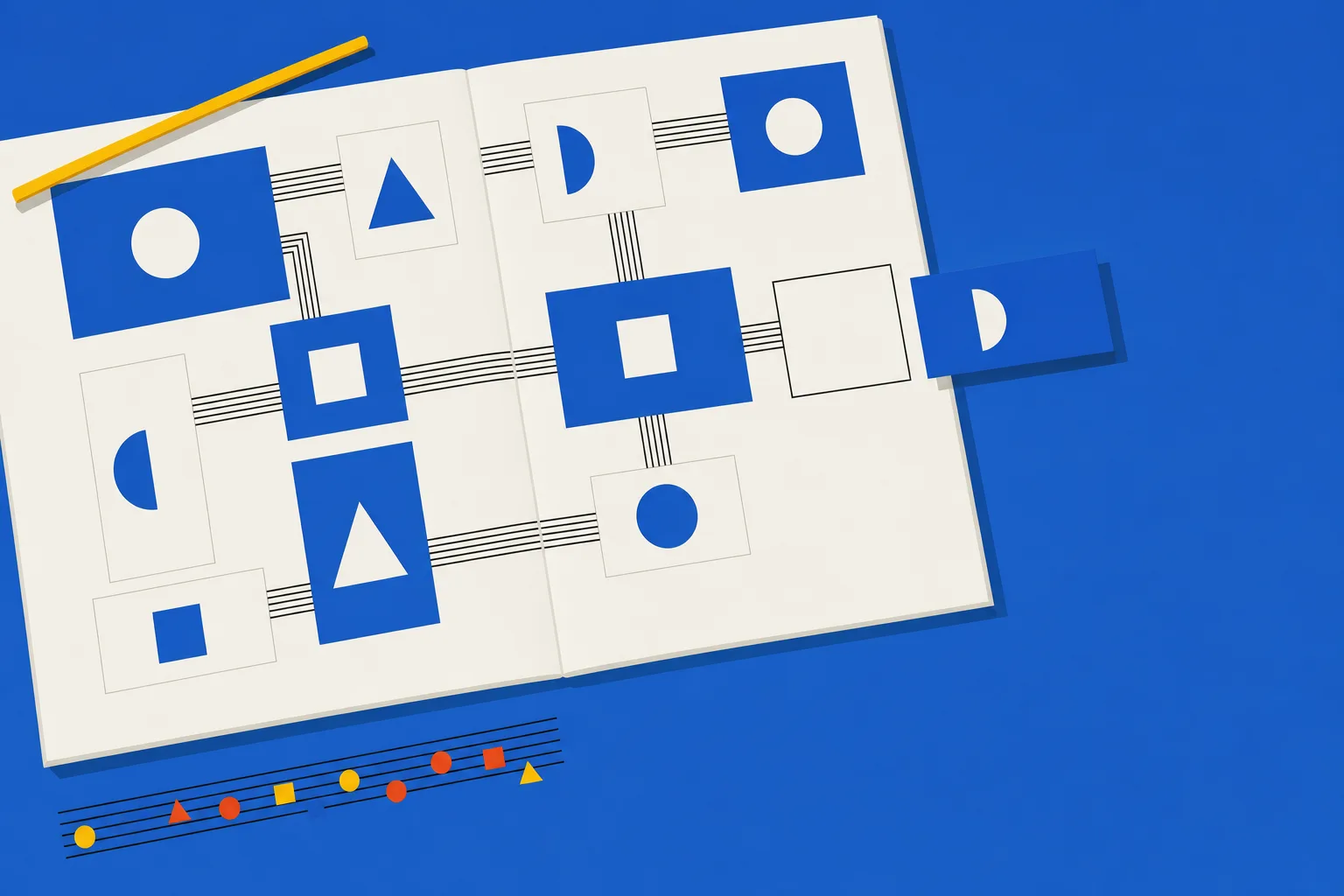
We list what you run, who looks after it, where things overlap and where the gaps are, and draw it as one map each team can zoom into.

Experts call this: enterprise architecture, capability map, application inventory
A route from today to where you want to be

A step-by-step route, agreed with you.

We agree the destination with you and break the way there into steps that fit your business plans.

Experts call this: target architecture, roadmap

New projects planned to fit

A new system designed to fit what is already there.

For a new project, we sketch how it plugs into everything around it, and review it as a conversation, not an exam.

Experts call this: solution architecture, design review

Also in this area

  • A list of every system and who looks after it (inventory)
  • A business capability map: what the business does, and which software supports each part
  • A current and a target picture
  • A step-by-step route between them
  • A design for each new project, and a friendly review (solution design)

Agree the rules

A few house rules, with an owner and a reason.

A few house rules that matter

A short list people can find and follow.

Worth knowing: Laws and regulators’ rules are not optional; “few and clear” is about your own house rules.

A short written list of agreed choices, such as which tools to use for common jobs and where customer details are kept, each with an owner.

Experts call this: standards, principles, reference architectures

Decide close to the work, and write down why

Decisions that don’t wait for the next review meeting, with the reasons kept.

Worth knowing: Teams can make a call after asking the people the decision affects; asking is not the same as everyone agreeing. Writing down why means fewer old arguments come back, not none.

Teams make the call after asking the people the decision affects, and a short note keeps what was chosen, why, and what was given up.

Experts call this: advice process, architecture decision records (ADRs)

Also in this area

  • Agreed ways of making common choices (principles and standards)
  • Ready-made patterns for common kinds of system (reference architectures)
  • Short decision notes, and the habit of writing them
  • A regular, optional session where teams can ask for advice

Check as you go

Rules checked while the work happens.

House rules turned into automatic checks

Rule questions often show up while the work is still small.

Worth knowing: Automatic checks catch many problems, not all of them. Only rules written so a computer can read them can be checked this way, and people still make the hard calls.

The rules that matter most become checks that run each time someone changes the software, each set to give a hint, ask a person or stop.

Experts call this: policy as code, guardrails, fitness functions

A record that builds as you go

Your auditor’s questions can be answered from the record rather than a last-minute dig.

Worth knowing: Checks leave a record of what was looked at. That record is a head start, not a certificate: your auditors still decide.

Each rule is linked to the checks that look at it, and each check leaves a dated record, kept in one place for your reviewers.

Experts call this: continuous compliance, compliance as code, audit evidence

Also in this area

  • House rules turned into checks that run each time software is built or a cloud setting changes (policy as code)
  • Strictness set per rule: hint, ask a person or stop
  • Exceptions with an owner and an end date
  • A record of each check, kept as you go

Choose wisely

New tools on purpose, and a plan B for what matters.

Three questions for anything new, and a plan B

A clear view of what comes in, why, and which pieces are risky.

An agreed way to add, try and retire tools and suppliers, AI helpers included: does it fit, what does it replace, what if it breaks? Plus a list of what could go wrong with the pieces you rely on, and a plan B for the important ones.

Experts call this: technology governance, technology radar, technology risk, AI governance

Also in this area

  • A list of the tools we use, try, are wary of, or are retiring (a technology radar)
  • An agreed way to retire old tools
  • A list of what could go wrong, and what to do about it
  • A simple setup for AI tools: what they may touch, and who checks them

For your technical team: we work with what you already use and the frameworks you follow, for example TOGAF, ArchiMate, the C4 model, Open Policy Agent, Kyverno, Azure Policy, AWS Control Tower, HashiCorp Sentinel, the AWS Well-Architected Framework and the NIST Cybersecurity Framework.

An open book showing a map of software boxes joined by staff-line connectors, with a new box sliding into the slot that fits it

Ways to start

One map

A first map of which software does what, and where the risky pieces sit.

First check

One house rule turned into an automatic check, with one team.

Unstick one review

Pick one decision that keeps waiting for a meeting; the team asks the people the decision affects in writing instead, and keeps a short note of why.

Ask us to map one corner

How we work

Map it with you, then agree, check and coach

Five steps in plain words. The last four are the ones the film ends on.

  1. Listen

    Listen to how decisions are made today

    We sit in on how decisions are made today, talk to the people who build and run your software, and list where things clash, overlap or wait for a review.

  2. Map it with you

    Map which software does what, with your teams

    We draw one map of which software does what and how it connects, with your teams, plus the rules people already follow, written down.

  3. Agree the rules

    Agree the few house rules that matter

    We help you agree the few house rules that matter most and how strict each one is. Most start as hints. Laws and regulators’ rules stay as they are.

  4. Set up checks

    Set up checks that run as you go

    We turn the top rules into automatic checks with one pilot team (the first team to try it), and the record starts building as the work happens.

  5. Coach as you go

    Coach your people as they go

    We coach your people as they go and hand over the map, the rules, the decision notes and the checks. We can stay on if you prefer.

What you get along the way

  • A map of which software does what, who looks after it and how it connects
  • A short list of house rules, each with an owner and a strictness level
  • Decision notes for the big choices, in a format your teams keep writing
  • The first automatic checks, running with a pilot team
  • A record of checks your reviewers can look through
  • Coaching sessions for the people who will keep it going
A small listening gadget clipped to a music stand beside a laptop with a single small yellow light

Who it suits

Where it becomes real

Illustrative examples, not customer stories: the kind of work this approach suits.

Financial services
For example, a rule like “customer records stay in the country we promised” could be checked each time the software changes, with the record kept, so a later review is a look through the folder rather than a dig through old emails.
Retail and e-commerce
For example, a business with several shop systems sees in one map which tools do the same job, and agrees which to keep before the next one arrives.
Healthcare
For example, a new system is planned to fit what is already there, and anything that touches patient records needs a named person’s yes, written down.
SaaS and product companies
For example, teams make their own design calls after asking the people affected, and a short note keeps the reasons, so the next team has them to hand.
Manufacturing and logistics
For example, older systems nobody looks after any more are listed as risks, each with a plan B, before they cause trouble.
Any team adopting AI helpers
For example, a new AI tool answers the same three questions as any new instrument: does it fit, what does it replace, what if it breaks? Plus one more: what may it touch?

Good to know

Questions we are often asked

Plain answers to what owners and tech leads ask first. Something else on your mind?

Ask us directly

What is architecture and governance, in plain words?

One shared map of which software does what and how it connects, plus a few agreed house rules that are checked while the work happens, not the night before launch.

Isn’t governance just more meetings and forms?

It shouldn’t be. Most rules start as hints and automatic checks, teams can decide after asking the people affected, and people spend their time on the hard calls.

Do we need a big architecture framework, such as TOGAF, to start?

No. Frameworks are useful references, not a starting requirement. We start with one map and a few rules, and use frameworks as a menu.

What does “rules checked as you go” mean?

The house rules that matter most are written so a computer can check them each time someone changes the software, the same way each time, and people write and update the rules themselves. They can catch problems early, and people still make the hard calls.

Can you promise how our audit goes?

No. We can’t promise an audit result. We help the rules get checked as you go and the record build along the way. Checks leave a record of what was looked at. That record is a head start, not a certificate: your auditors still decide.

Will it slow our teams down?

Most rules start as hints; only a few become a firm stop. Routine work goes ahead, and a firm stop is kept for the few rules that really matter.

Do we have to replace our tools?

Not to get started. We begin from what you have and the checks your tools already support; if the map shows two tools doing the same job, you decide which to keep.

How will we know it’s working?

We agree a few plain signs with you at the start: rule questions found earlier rather than later, decisions waiting less, and the map still current. You keep track of those signs, and we make no promises about the results.

Heard it before?

Myths, answered

Myth: “Governance means red tape.”

Answer: Done well, it works the other way: rules turned into automatic checks answer while the work happens, so fewer things wait for a meeting. A shared beat doesn’t slow the music; it lets everyone play together.

Myth: “Architecture is a big diagram in a drawer.”

Answer: A map only counts if teams use it. Keep it small, shared and current, and let each team look after its own part.

Myth: “More rules make us safer.”

Answer: In our story, Sione hands out a thousand rules and the orchestra dozes off by rule forty. A few clear house rules get followed. Laws and regulators’ rules are not optional; “few and clear” is about your own house rules.

Myth: “Automatic checks mean no human judgement.”

Answer: No. Automatic checks catch many problems, not all of them. Only rules written so a computer can read them can be checked this way, and people still make the hard calls.

Myth: “Only big banks and governments need this.”

Answer: Any business with more than one team or a handful of tools has parts that must fit and rules it must follow. The amount should match the size of the business.

Myth: “Governance means one boss decides everything.”

Answer: Teams can make the call, as long as they ask the people the decision affects and write down why. Teams can make a call after asking the people the decision affects; asking is not the same as everyone agreeing. Writing down why means fewer old arguments come back, not none.