Data You Can Trust · Checked, labelled, owned

Know where your numbers came from, and who looks after them.

Data engineering and governance means getting your numbers from where they start to the people who use them: moved the same way each time, checked on the way, labelled with where they came from, and looked after by someone named.

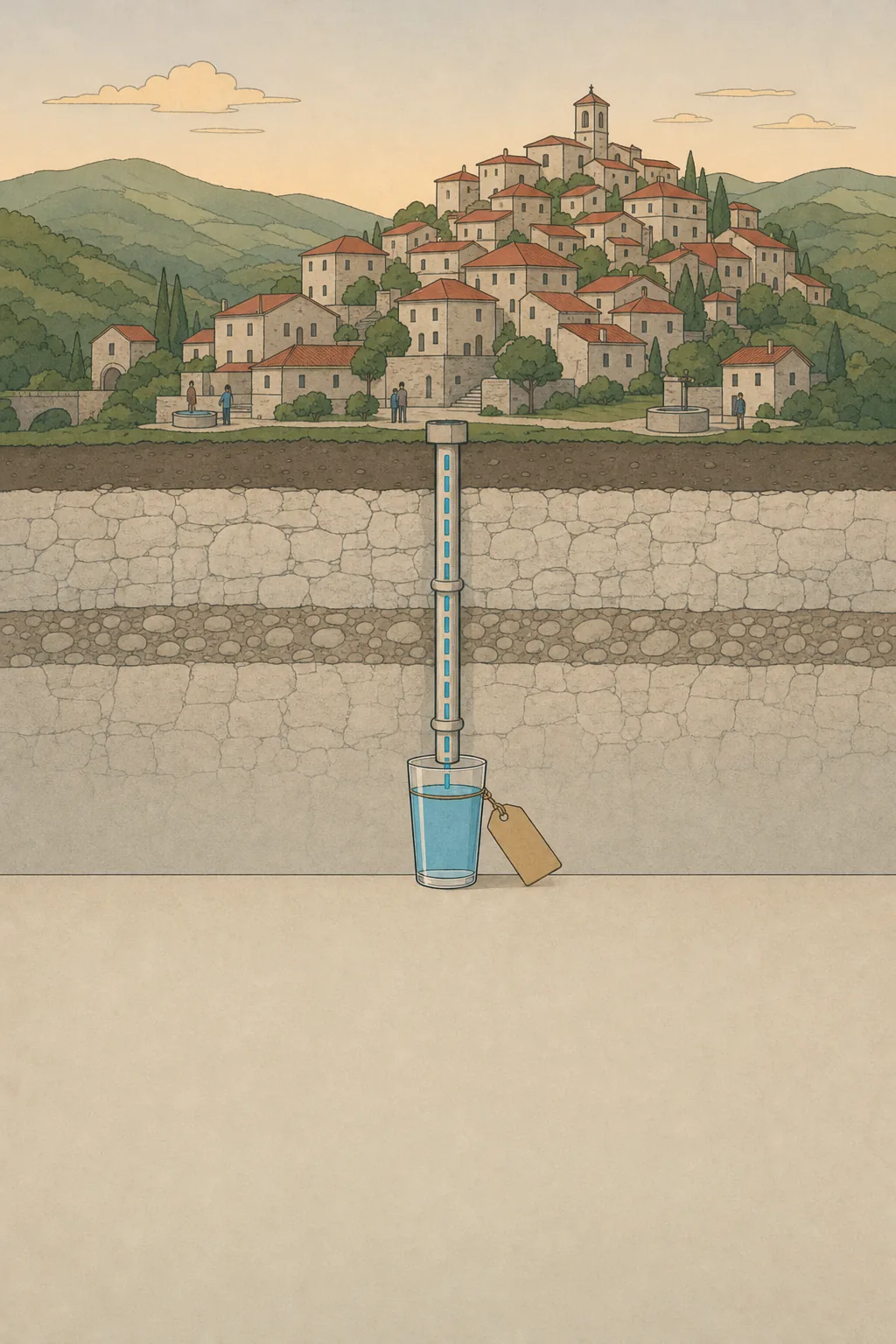
Read the tag backwards

Who’s who in the story

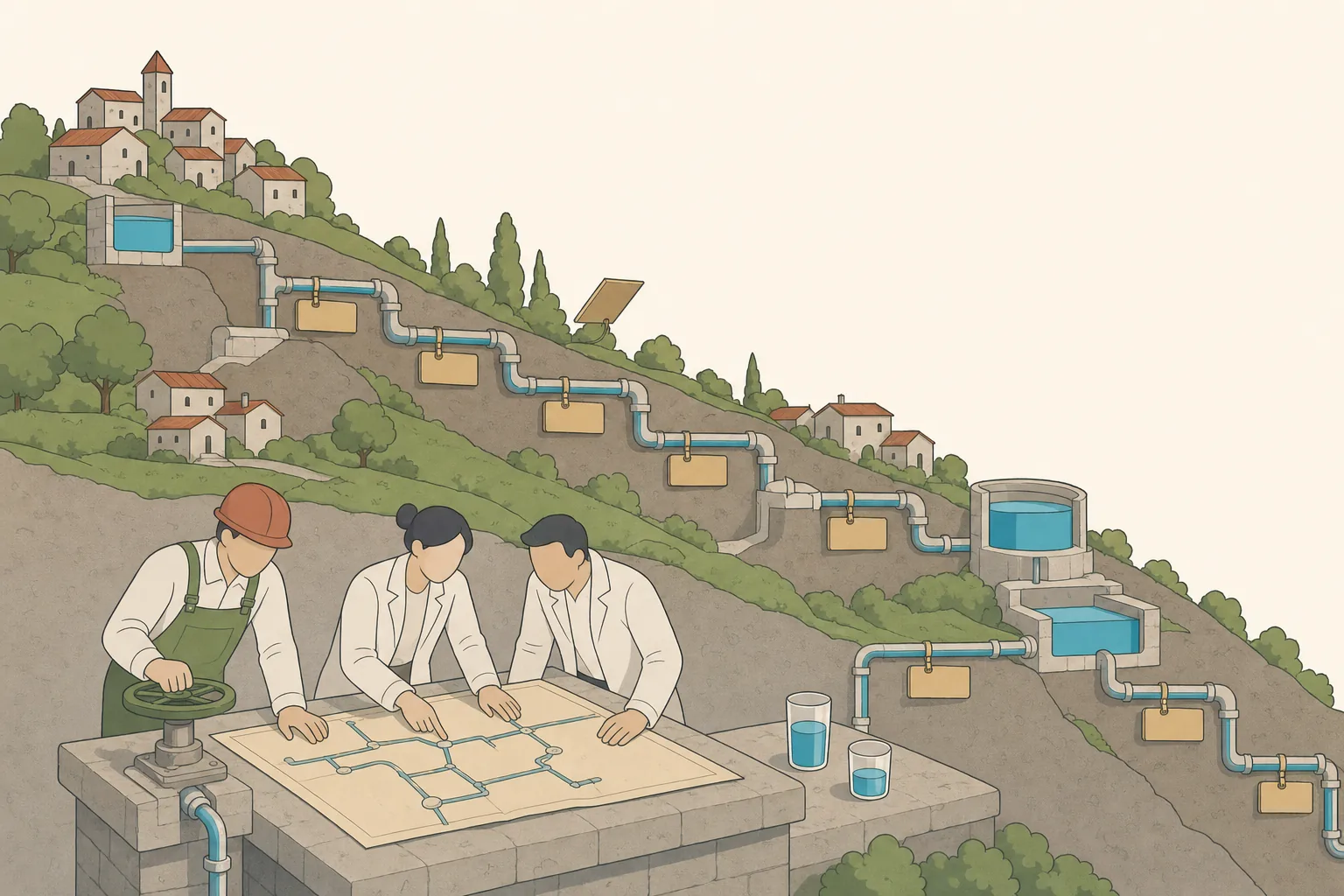
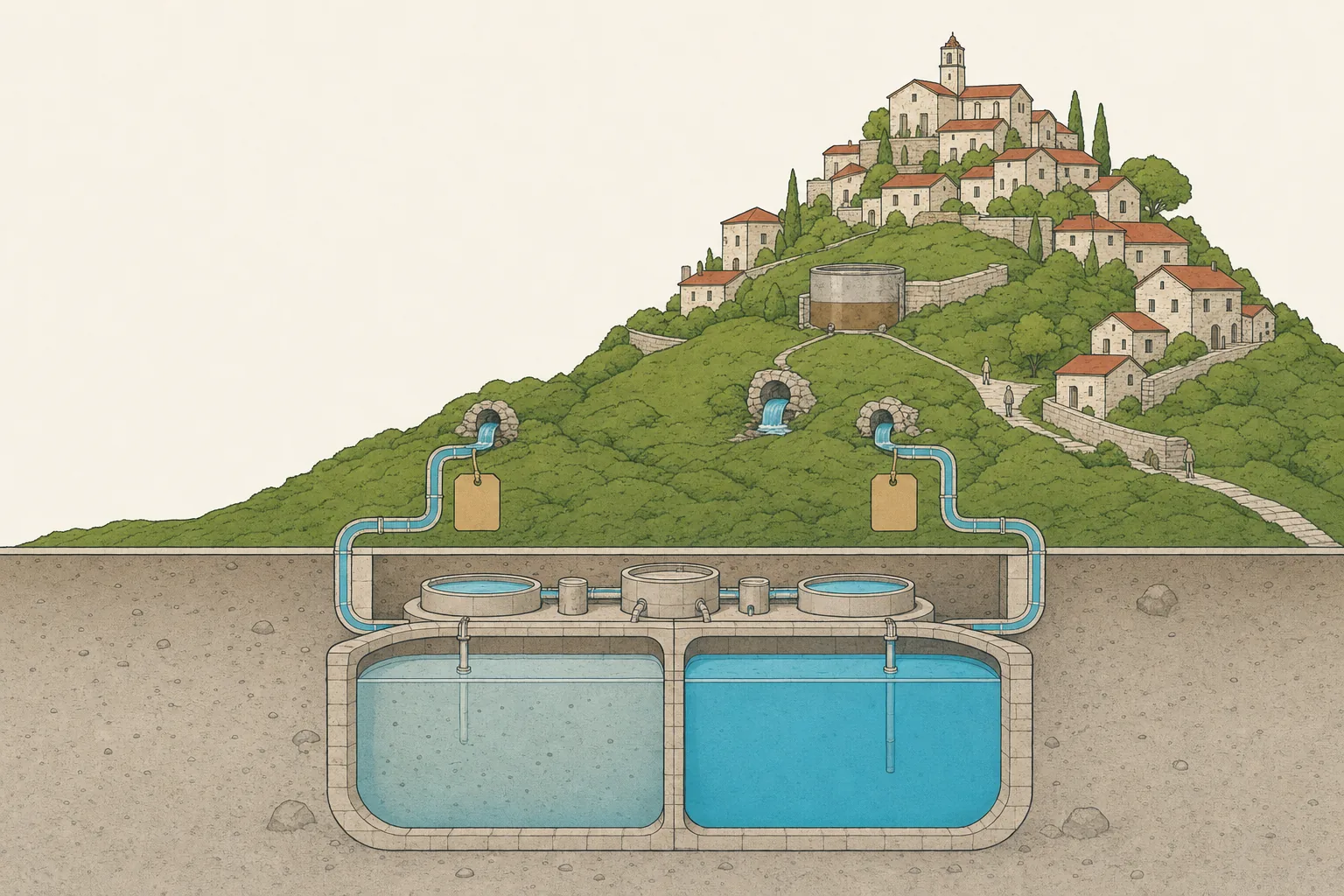
In our story, water is your numbers, the springs are your apps and spreadsheets, the pipes move the numbers into one shared reservoir, the cleaning plant is the checks, Gota’s luggage tag is the record of where each number started, the nameplates are named owners, and the private-records tap is who gets to see what. An unnamed bucket is someone nobody has said yes to yet. Tomás is the engineer who looks after the shared pipes; the Mayor stands in for a business leader.

old hill tankappsspreadsheetscleanedplantrawthe shop managerthe bakerowner: ?

The tag, read backwards · The stock count

  1. Cleaned side of the reservoir · caretaker: Tomás
  2. Cleaning plant · caretaker: Tomás
  3. Raw side of the reservoir · caretaker: Tomás
  4. Main pipe · caretaker: Tomás
  5. From: Apps spring · owner: the shop manager

The stock count comes from the apps spring, through the main pipe, the raw side, the cleaning plant and the cleaned side. The shop manager owns these numbers; Tomás looks after the pipes.

Worth knowing: Labels show where data came from. They don’t make it correct by themselves; that’s what the checks, and fixing the source, are for.

An illustration, not a measurement. Each stop punches a hole in the drop’s tag, and the same line goes on Tomás’s clipboard.

Watch · 2 min 9 sec

Data You Can Trust: where your numbers come from

Every street in a hill town swears its jug of water is the right one, and they all blame Tomás. A short story about one smug drop, a frog who grabs whatever nobody owns, and why your numbers need to be moved, checked, labelled and owned.

Read the story instead
  1. NarratorWould you drink this? Nobody knows where it’s from.
  2. GotaCheers!
  3. NarratorEvery street swears its jug is right. All blame Tomás.
  4. On screenEvery team, its own numbers.
  5. TomásNot my pipe!
  6. NarratorYour business has jugs like these: two reports, two answers.
  7. On screenTwo reports. Two answers.
  8. NarratorYour numbers flow like water. Move them to one place. Check them, note where they’re from, name an owner.
  9. NarratorMove, check, label, own. That’s data engineering and governance.
  10. NarratorSo Tomás tails one suspicious drop. Gota.
  11. GotaMountain spring water, obviously.
  12. On screena sticker
  13. On screenmountain spring ✓
  14. NarratorYour apps and spreadsheets are the springs. Pipes carry their numbers, automatically, into one shared reservoir, sorted and labelled. Raw and cleaned kept apart.
  15. On screena lakehouse
  16. On screendata pipelines
  17. NarratorAnd that old hill tank, like a forgotten spreadsheet? Nobody owns it.
  18. On screenold spreadsheet nobody owns
  19. FrogFinders keepers!
  20. NarratorSome teams need numbers the moment they change. The bakery only needs them once a day. Bread can wait.
  21. On screenthe moment it changes · once a day
  22. On screenstreaming and batch
  23. NarratorThe cleaning plant checks every drop. Murky ones wait on a tray until Tomás looks.
  24. On screendata quality
  25. On screenwaiting for Tomás
  26. NarratorEvery stop marks Gota’s tag. Read it backwards: there’s where she really started.
  27. GotaOh no. I’m from the frog’s tank.
  28. On screenFROM: OLD HILL TANK
  29. On screennot where she thought
  30. On screendata lineage
  31. NarratorNow we know which tank to fix. Every pipe and tank gets an owner. The baker owns the bread numbers.
  32. On screenhill tank: now owned
  33. On screenbread numbers: Baker
  34. On screendata owners
  35. NarratorPrivate records get their own tap. Its owner decides whose glass gets filled.
  36. On screenprivate records
  37. On screenaccess rules
  38. NarratorThe mayor’s big idea? One giant tank. No sorting, no labels. Fix it later.
  39. FrogBigger pond!
  40. On screenno sections · no labels
  41. On screenowner: ?
  42. NarratorEvery glass, one checked reservoir. Each tag shows where it started, and who checked it.
  43. TomásThat one’s my pipe!
  44. NarratorAlgoshred traces where your numbers come from, side by side with the people who use them.
  45. NarratorWe build one pipe at a time, and your team runs it with us.
  46. On screenMove it. Check it. Label it. Own it.
  47. NarratorSo, would you trust a glass of your numbers? Visit algoshred.com, or write to contact@algoshred.com.

The idea in plain words

Four ideas, one glass of water

Each one in everyday words first, then the name experts use for it.

A hill town cut open to show pipes carrying water from springs into one stone reservoir with a cloudy side and a clear side

Move it. Check it. Label it. Own it.

  1. 01

    Pipes that move your numbers to one place

    Numbers from your apps, spreadsheets and partners travel through pipes into one shared reservoir, the same way each time, sorted and labelled. Live where waiting would hurt, once a day where that is fine.

    Experts call this: data pipelines, streaming and batch, data platform

    Worth knowing: “Live” means within seconds or minutes, not at once, and live flows take more effort to run. Use them where waiting would hurt. A big shared store helps only when what goes in is sorted, labelled and owned. The problem is missing labels and owners, not one shared store.

  2. 02

    A cleaning plant between raw and cleaned

    Each delivery is checked before it moves from the raw side to the cleaned side: is it late, is anything missing or doubled, is it the right shape, and does it make sense? What looks wrong is set aside for a named person to look at.

    Experts call this: data quality, data observability

    Worth knowing: Checks catch many problems, not all of them.

    See what the checks set aside
  3. 03

    A tag on each drop

    Each set of numbers carries a record of where it came from, each step on the way and which checks it passed, so an odd figure can be followed back to the source that needs fixing instead of argued about.

    Experts call this: data lineage, data catalog

    Worth knowing: A label says where data came from, not that it is right.

    Follow one glass back to its tank
  4. 04

    A name on each set of numbers

    Each important set of numbers has an owner from your business, who answers for what it means and decides who can see private records. Engineers look after the pipes themselves.

    Experts call this: data ownership, stewardship, data governance, access rules

    Worth knowing: Rules help when people can follow them. This is not legal advice; your legal advisers have the final say.

    See whose glass gets filled

See the difference

Switch on the checks. Watch the glass.

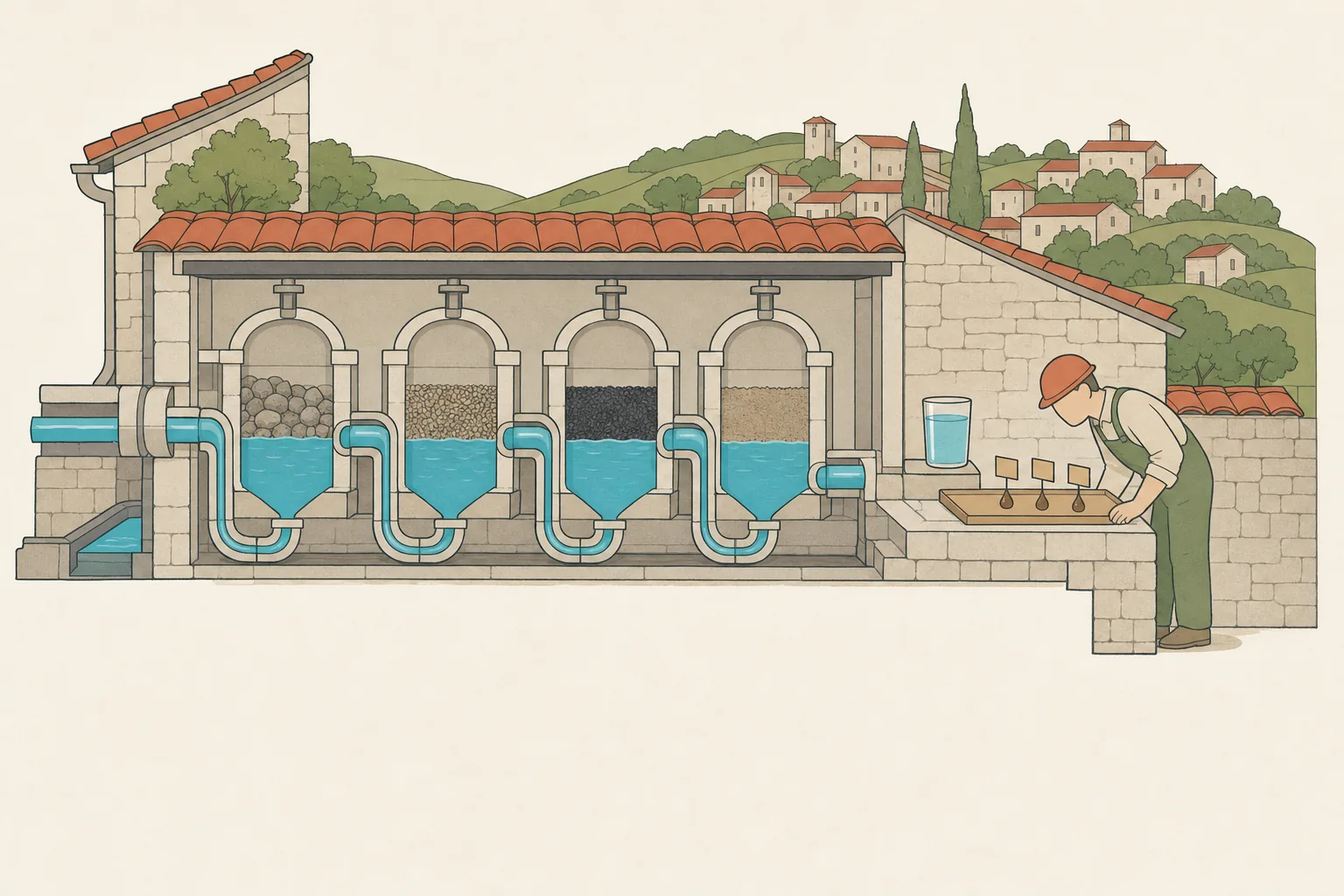
Four gates stand between the raw side and the cleaned side of the reservoir. Switch each check on or off and see what reaches the glass, and what waits on the tray for a person.

A small cleaning plant where water passes four gates, a few murky drops wait on a tray, and a worker looks them over
waiting for a named personFresh?All there?Right shape?Makes sense?
The checks on the way in

Clear glass · Someone still looks at the tray.

Worth knowing: Checks catch many problems, not all of them. Someone still has to look at what gets set aside.

An illustration, not a measurement. The glass shows clear or cloudy, not a score.

Who’s in charge

Name the owners. Then see whose glass gets filled.

Three taps, three owners. Switch the nameplates on, then pick who is asking: shared taps pour for anyone the town has said yes to, and the private-records tap pours only for the names on its owner’s list. An unnamed bucket stands for someone nobody has said yes to yet.

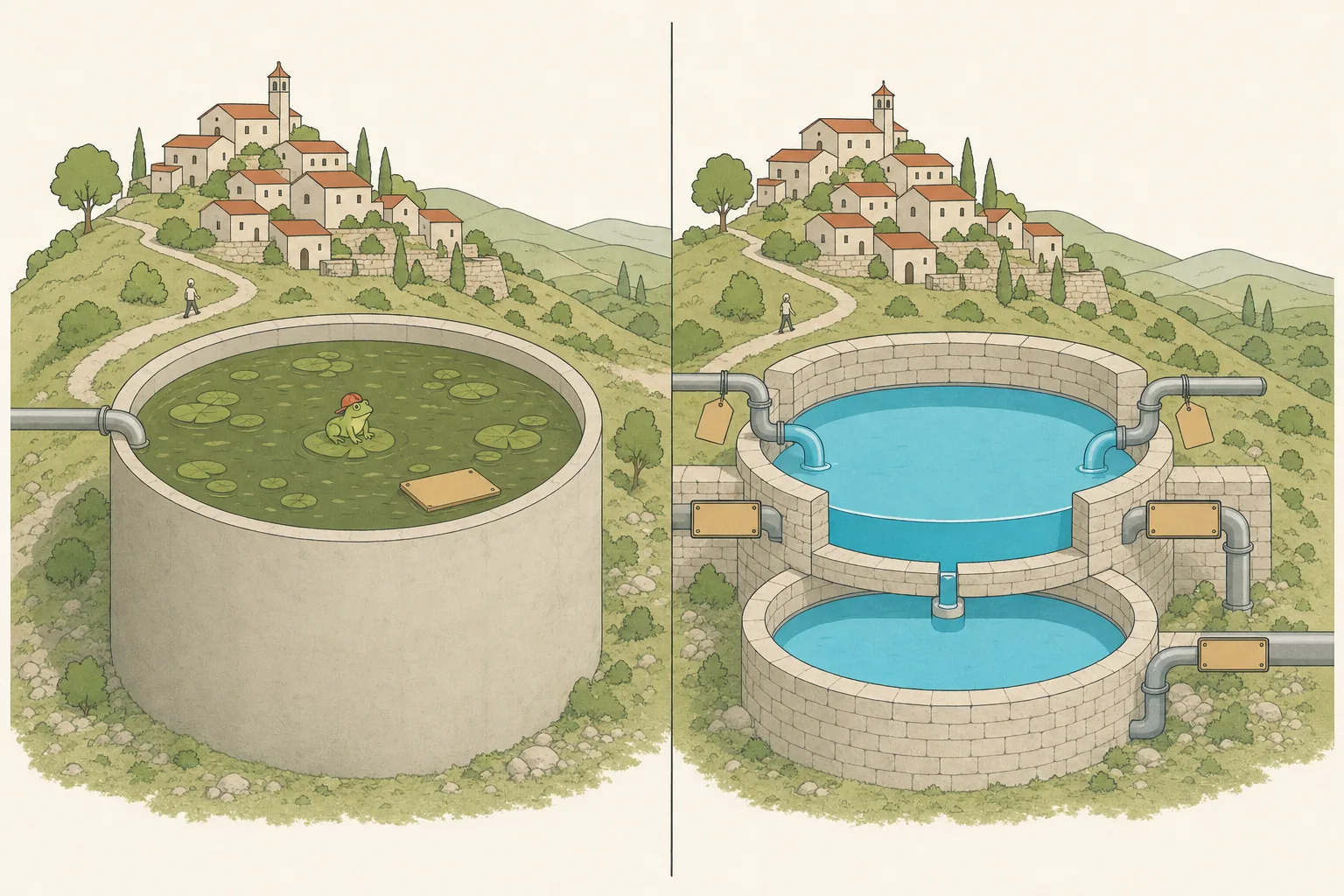
One giant unlabelled tank gone swamp green with a frog on a lily pad, beside a tidy two-section reservoir with tags and nameplates
The Mayor’s giant tank: no sorting, no labels, owner: ?

Worth knowing: A big shared store helps only when what goes in is sorted, labelled and owned. The problem is missing labels and owners, not one shared store.

the bakerthe fire chiefthe clinic owner
Who is asking?
  • Bread numbers

    the baker

    Poured

  • Fire-station board

    the fire chief

    Poured

  • Private records

    the clinic owner

    On the list: The clinic owner

    Not on the list. Ask the clinic owner

Worth knowing: Rules help when people can follow them easily, so we set them up with the teams who use the data.

Worth knowing: Helping you see who can open private or personal data is not legal advice, and it does not by itself meet any law’s requirements. Your legal advisers have the final say.

An illustration, not a measurement. A named owner decides who can see private records.

Sounds familiar?

The signs every street has its own jug

If any of these ring true, your numbers are probably arriving without a tag or an owner.

  • “Two reports answer the same question with two different numbers.”
  • “When a figure looks odd, it takes a long hunt to find where it came from.”
  • “Ask who looks after a report and everyone points at someone else.”
  • “A customer or the boss spots the mistake before the team does.”
  • “People check the main report against their own spreadsheet before they believe it.”
  • “Everything went into one big store, and now nobody can find anything in it.”

A quick self-check

Six plain questions. Answer what you can, and we’ll point to where we’d look first.

01If a number in your main report looked wrong, could someone follow it back to where it came from?
02When two teams report the same thing, do they get the same answer?
03Does each important set of numbers have a named person who answers for it?
04Do you find bad data before your customers or managers do?
05Is it clear who decides who can see customer or staff details?
06Do teams warn each other before changing what they send?

Where we’d look first

Answer any question and the places we’d look first appear here.

Talk it through

Answer “No” or “Not sure” to any question to email the list.

Nothing is stored or sent unless you choose to email it.

What we help with

From tracing one number to pipes your team runs with us

Eight pieces of work. Start by tracing one number, or bring them together into one checked, labelled, owned supply.

Trace and plan

Where your numbers start, and where they go wrong.

Trace one number back to where it started

A map of where that number really comes from, where it goes wrong and which source to fix first.

We pick one figure that matters to you and follow it back through every spreadsheet, app and step, side by side with the people who use it.

Experts call this: data assessment, lineage discovery
Also in this area

  • Tracing one important number back to every source
  • Talking to the people who make and use the numbers
  • A plan tied to one real problem before any rulebook
  • A plain map of which sources and pipes to fix first

Move it

One shared place, fed by pipes that run on their own.

One shared reservoir, sorted and labelled

Teams can draw from one sorted, labelled place instead of keeping their own copies.

Plan and build one place for your numbers that keeps a raw side and a cleaned side next to each other, moving off old stores step by step. A big shared store helps only when what goes in is sorted, labelled and owned. The problem is missing labels and owners, not one shared store.

Experts call this: data platform, data warehouse, lakehouse, migration

Pipes that run on their own, live or once a day

Numbers can arrive without anyone carrying exports by hand.

Automatic routes that bring numbers in from apps, files and partners and deliver them the same way each time, live only where waiting would hurt.

Experts call this: data pipelines, ETL/ELT (copy, tidy and load, in either order), orchestration (steps run in order), streaming and batch

Also in this area

  • One shared store with raw and cleaned sides (warehouse, lake or lakehouse), on open file formats where possible, which makes it easier to change tools later
  • Automatic pipelines from apps, files and partners
  • Live flows where waiting would hurt, daily runs where daily is fine
  • Moving off old stores and spreadsheets step by step
  • Watching running costs and switching off pipes nobody uses

Check and label it

Checks before the cleaned side, and tags that show where each number started.

Checks, and a tray for what looks wrong

Problems can show up at the plant rather than at the tap.

Tests on each delivery, before it reaches the cleaned side, for late arrivals, missing or doubled records, odd shapes and values that don’t make sense, with what fails set aside for its named owner. Checks catch many problems, not all of them. Someone still has to look at what gets set aside.

Experts call this: data quality, data observability

Tags, a map of your data and agreements between teams

An odd figure can be followed back, and changes can be agreed before they break a report.

A record of where each set of numbers came from, a findable map of what data you have and who looks after it, and written agreements between the team that sends data and the team that uses it. Written agreements help teams agree before they change things; they don’t replace talking to each other.

Experts call this: data lineage, data catalog, data contracts

Also in this area

  • Tests on each delivery: fresh, all there, right shape, makes sense
  • Warnings for late, missing or odd data, sent to the named owner
  • Where-it-came-from records (lineage) and a findable map of what exists (catalog)
  • Written agreements between sending and using teams (data contracts)

Own it

A name on each important set of numbers, and clear rules for private records. This is not legal advice; your legal advisers have the final say.

A named owner for each set of numbers, and shared meanings

Each important question has an agreed meaning and a named person to ask.

Name an owner and a day-to-day caretaker for each important set of numbers, agree what words like “sale” and “customer” mean, and tidy duplicate records.

Experts call this: data ownership, data stewardship, master data (one record per customer or product)

Who can see private records, decided by their owner

Their owner decides, in writing, who may open private records.

Decide who can see which private or personal data, record who opened what, and agree how long it is kept, with laws such as India’s Digital Personal Data Protection (DPDP) Act and Europe’s General Data Protection Regulation (GDPR) in mind. Helping you see who can open private or personal data is not legal advice, and it does not by itself meet any law’s requirements. Your legal advisers have the final say.

Experts call this: data governance, access rules, privacy support

Getting your numbers ready for AI helpers

AI helpers can start from material its owners have approved. Tagged, checked material gives AI helpers a better start, not right answers. Who may see what is still the owner’s call.

Prepare documents and records for AI, tag where they came from, and set things up so AI helpers are meant to read only the material their owners have approved.

Experts call this: AI-ready data, provenance (a record of where it came from)

Also in this area

  • Named owners and caretakers (stewards)
  • Shared meanings for important words, and one record per customer or product
  • Who-can-see-what rules, records of who opened what, and how long things are kept (not legal advice)
  • Preparing documents and records for AI helpers, with their origin tagged

For your technical team: we work with what you already use, for example Databricks, Snowflake, BigQuery, Microsoft Fabric, dbt, Apache Airflow, Apache Kafka, Apache Iceberg and OpenLineage.

A luggage tag with a column of punched holes beside a clipboard, a short cutaway pipe and a peeled-off sticker

Ways to start

Trace one number

Follow one important figure back to its sources and write up a map of what we find.

Owners workshop

One working session to name owners and caretakers for your most important numbers.

Checks on one pipe

Add checks to one pipe that matters, with what looks wrong set aside for a named person.

Ask us to trace one number

How we work

Trace first, then build one pipe at a time

Five steps in plain words, from following one number back to its source to your team running it with us.

  1. Trace

    Follow one number back

    We pick one number your team argues about and follow it back through every spreadsheet, app and step, writing down what we find.

  2. Together

    Sit with the people who use it

    Side by side with the people who make and use the numbers, we agree who owns each important set of numbers, what the important words mean and which source to fix first.

  3. One pipe

    Build one pipe end to end

    We build one pipe from its sources to one report or AI use, with checks, tags, an owner and who-can-see rules in it from the start.

  4. Next pipe

    Add the next pipe

    When the first pipe works for its team, the next one reuses the same pattern, and the pipe map and shared meanings grow with it.

  5. Run it with us

    Your team runs it with us

    Your owners and engineers run the pipes, look at what the checks set aside and review the rules regularly, with us working beside them. How much your team runs on its own, and how long we stay involved, is agreed with you.

What you get along the way

  • A map of one number from its sources to the report, with each stop marked
  • A short list of sources and pipes to fix first, agreed with you
  • One pipe built end to end, with checks, tags and an owner
  • A pipe map that says what exists and who looks after it
  • Written who-can-see rules for private records, agreed with their owners. This is not legal advice; your legal advisers have the final say.
  • Working sessions with the people who will run the pipes
Three people work side by side over a blank pipe map while blank nameplates hang on the pipes behind them

Where it fits

Where it becomes real

Illustrative examples, not customer stories: the kind of work this approach suits.

Retail and e-commerce
For example, the stock count on the shop floor and the one on the website could come from the same checked pipe, so the two teams compare the same number.
Finance teams
For example, the revenue figure in the board report could carry a tag back to its sources, so an odd number is followed back instead of rebuilt by hand.
Healthcare
For example, records about people could sit behind their own tap, with a named owner deciding who can see them, and a record of who opened them. This is not legal advice; your legal advisers have the final say.
Logistics
For example, delivery updates could flow live where a late answer would hurt, while the monthly summary stays on a simpler daily run.
Manufacturing
For example, machine readings could be checked on the way in, with odd values waiting for the line’s owner before they reach the weekly report.
Teams using AI helpers
For example, an assistant that answers questions from company documents could read only tagged, permitted material and show where an answer came from.

Good to know

Questions we are often asked

Plain answers to what owners and tech leads ask first. Something else on your mind?

Ask us directly

What is data engineering and governance, in plain words?

Getting your numbers from where they start to the people who use them: moved the same way each time, checked on the way, labelled with where they came from, and looked after by a named person who decides who gets to see them.

Do we have to move everything to a new platform?

No. We start with one number that matters and the pipes behind it. A new shared store comes in only where it helps, and moves happen step by step.

Which tools do you work with?

We start from what you already run, for example Databricks, Snowflake, BigQuery, Microsoft Fabric, dbt, Airflow and Kafka. A new tool comes in only where it fills a real gap.

Isn’t governance just paperwork that slows people down?

It shouldn’t be. We tie the rules to one real problem first, keep them short and build them into the pipes, so the right person’s glass gets filled without a chase. Rules help when people can follow them easily, so we set them up with the teams who use the data.

Who looks after the data once it is set up?

People from your business. Each important set of numbers gets a named owner and a caretaker who keeps it running, and your team runs the pipes with us beside them. How much your team runs on its own, and how long we stay involved, is agreed with you.

Does this help with privacy laws like India’s Digital Personal Data Protection (DPDP) Act and Europe’s General Data Protection Regulation (GDPR)?

It helps you see where personal data goes, who can open it and how long it is kept. Helping you see who can open private or personal data is not legal advice, and it does not by itself meet any law’s requirements. Your legal advisers have the final say.

Does everything need to be live?

No. Live flows take more effort to run. We use them where waiting would hurt, such as stock on the shelf or an unusual payment, and keep daily runs where daily is fine. As in the film: bread can wait.

How do you price this?

It depends on scope. We usually start small, by tracing one number, and agree the plan and cost with you before anything bigger.

Heard it before?

Myths, answered

Myth: “Buy one big data store and it sorts itself out.”

Answer: A store with no sorting, no labels and no owners turns into a swamp, like the Mayor’s giant tank. The shared store is fine; the missing labels and owners are the problem.

Myth: “Data is IT’s job.”

Answer: Building and running the pipes is the engineers’ job. What the numbers mean, and who gets to see them, is the business’s call, so each important set of numbers has a business owner.

Myth: “Cleaning it once means we’re done.”

Answer: Water is checked every day, not once. Checks run on each delivery, and someone still looks at what they set aside.

Myth: “If it’s labelled, it must be right.”

Answer: A label says where data came from, not that it is right. In the film, Gota’s sticker said mountain spring. Her tag said otherwise.

Myth: “Everything has to be live.”

Answer: Live pipes take more looking after. Use them where waiting would hurt; once a day is fine for many jobs.

Myth: “Governance means saying no.”

Answer: It means a named person decides, quickly, whose glass gets filled, with rules short enough that people follow them.