Developer Platform
VibeControls
Developer control plane for remote environments and terminal sessions.
Unified dashboard for managing projects, SSH connections, terminal sessions, and remote development environments with real-time updates, tmux integration, and a plugin-based agent architecture.

- 50+Plugins available in the marketplace
- 16+AI providers, all BYOK
- 600+MCP tools exposed to AI agents
- < 5 minTime to first agent
- 9Surfaces: web, desktop, mobile, CLI, browser, VS Code, MCP, Node & Python SDKs
- 5Session providers — tmux, wezterm, zellij, SSH, custom
What is VibeControls?
VibeControls is a unified developer control plane and Internal Developer Platform that orchestrates the environments, terminal sessions, agents, sandboxes, tunnels, AI assistants, plugins, catalog, templates, and operational workflows a developer or team uses every day. Modern engineers juggle three to five environments at once — local, staging, production, client servers, sandbox VMs — and most tools either lock you into the cloud or leave you wiring up tmux, SSH, and a pile of brittle scripts by hand. VibeControls sits in the middle with an agent-based architecture that runs anywhere and a plugin ecosystem for everything else.
One console for every machine, agent, terminal, tunnel, sandbox, and AI assistant your team runs. You install a lightweight agent on any target, spin up reproducible project contexts called vibes, share live terminal sessions with teammates, expose local services through governed tunnels, and let AI agents handle the boring parts in isolated sandboxes — local laptop to global production, all under one workspace identity and one audit trail.
Because VibeControls is built on the Burdenoff platform, it is workspace-scoped from day one: every agent, vibe, session, note, and document belongs to a workspace, so RBAC, audit, billing, quotas, SSO, notifications, i18n, and accessibility come built in rather than bolted on later. Its agent-first foundation gives it a live signal from every developer's machine — the platform sees what is actually running, not just what is declared.
Explore the capabilities
Click through what VibeControls does — each built and shipping inside the product.
And more
Workflow automation & scheduling
The Vibe Deck gives you a grid of one-click buttons for scripts, commands, and webhooks; the Vibe Calendar runs cron-style scheduled tasks directly on the agent — webhooks, scripts, AI prompts, backups — with logs, history, and retries, and no separate scheduler service to operate.
Team collaboration & workspaces
Share vibes and sessions with view, edit, or admin permissions; collaborate in shared team workspaces; comment inline on vibes, sessions, and notes via Conversations; and rely on workspace-wide tagging, search, and export — all scoped by fine-grained RBAC.
AI orchestration hub (BYOK)
Per-vibe AI contexts with project files and system prompts, a reusable prompt library, a task queue with status, logs, and token/latency stats, and a single interface over 16+ providers (Claude, Codex, Copilot, Gemini, Cursor, Aider, Amp, Goose, Plandex, OpenCode, OpenRouter, Ollama, MiniMax, and any OpenAI-compatible endpoint). VibeControls never resells inference — you bring your own key and see exactly what each call costs.
AI Assistant, AI Builder & Plan mode
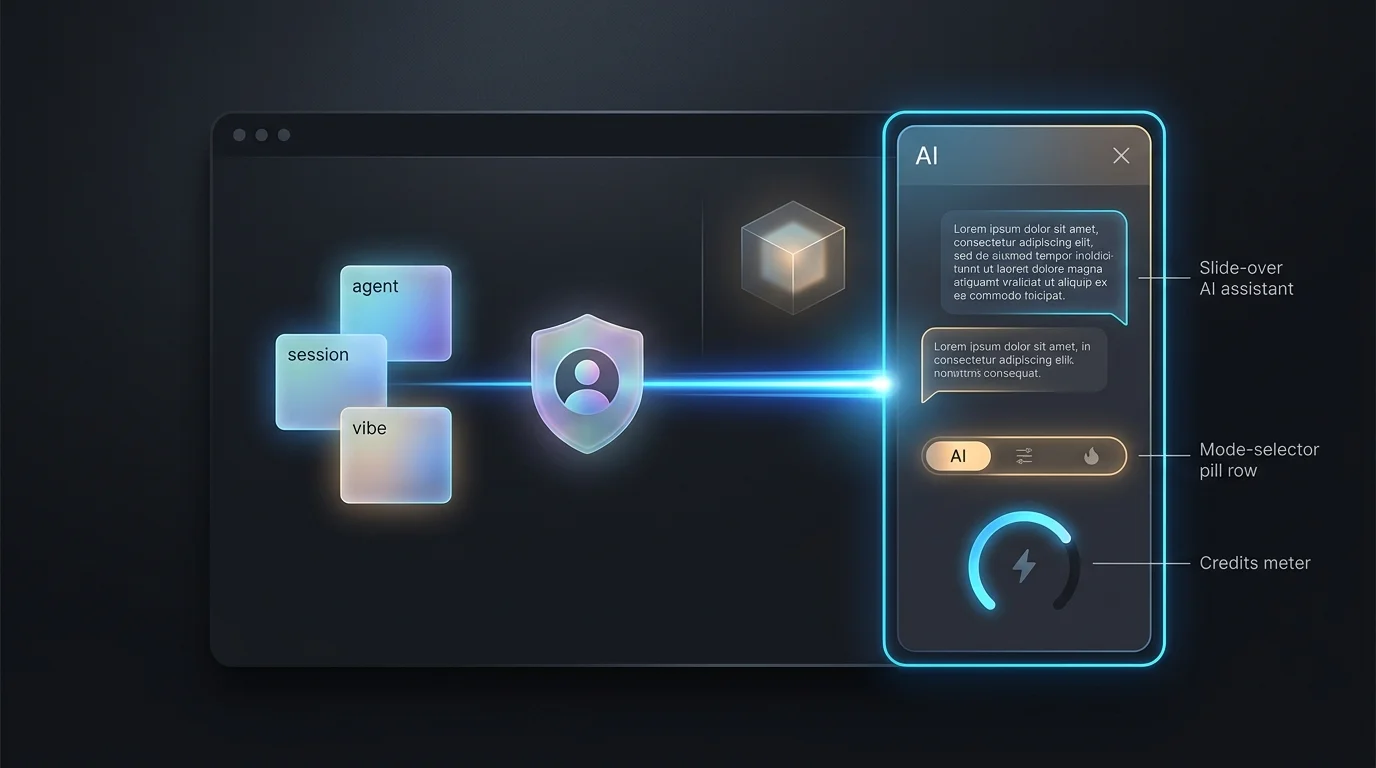
An in-product assistant reads your project context and takes governed actions under your identity with automatic multi-provider fallback. AI Builder generates Vibe plugins, actions, and integrations from natural language with sandbox-backed testing. Plan mode produces a structured, reviewable plan — annotated and approved in Plannotator — before any high-blast-radius tool call fires.
MCP server & programmable surfaces
An MCP server exposes tools, resources, and prompts to Claude Desktop, Claude Code, and any MCP-compatible agent. The same API is reachable from the web app, desktop (Electron) and mobile (Capacitor) apps, CLI with TUI, Chrome extension, VS Code extension, and Node and Python SDKs — every capability from every surface, with one identity and audit trail.
Software catalog, templates & per-vibe docs
A typed software catalog binds components to the vibes where work actually happens, so it stays in sync with reality; templates scaffold new components, vibes, and sandboxes from approved starting points; and per-vibe documentation sites with an asynchronous builder, revisions, and embedded docs keep knowledge next to the project. Per-vibe LLM Context mints signed, scoped, expiring, audited URLs to safely point external LLMs at a governed slice of your project.
How it works
Install the agent
Install the lightweight VibeControls agent on your local machine, remote server, or cloud instance in seconds — up and running in three commands via npm or a one-line shell installer.
Connect & configure
Sign in, create a DIRECT or SSH target, and the agent registers itself — VibeControls provisions its credentials automatically. Add your projects as vibes and install plugins from the marketplace.
Onboard the rest of your fleet
From an existing agent, add SSH targets for remote servers; one click installs the agent remotely, inherits credentials, and joins the topology graph — local, staging, production, and client machines under one console.
Control everything
Manage terminals, tunnels, sessions, schedules, AI tasks, and team access from a single unified dashboard. Open browser terminals, build Vibe Deck buttons, and schedule jobs in the Vibe Calendar.
Let agents work, keep humans in the loop
AI agents deploy code into isolated sandboxes, run tests through local tunnels, and request human-in-the-loop terminal approval before promoting to alpha or prod — every step RBAC-checked and audited.
Who it's for
Real workflows VibeControls is built to support.
Individual power users
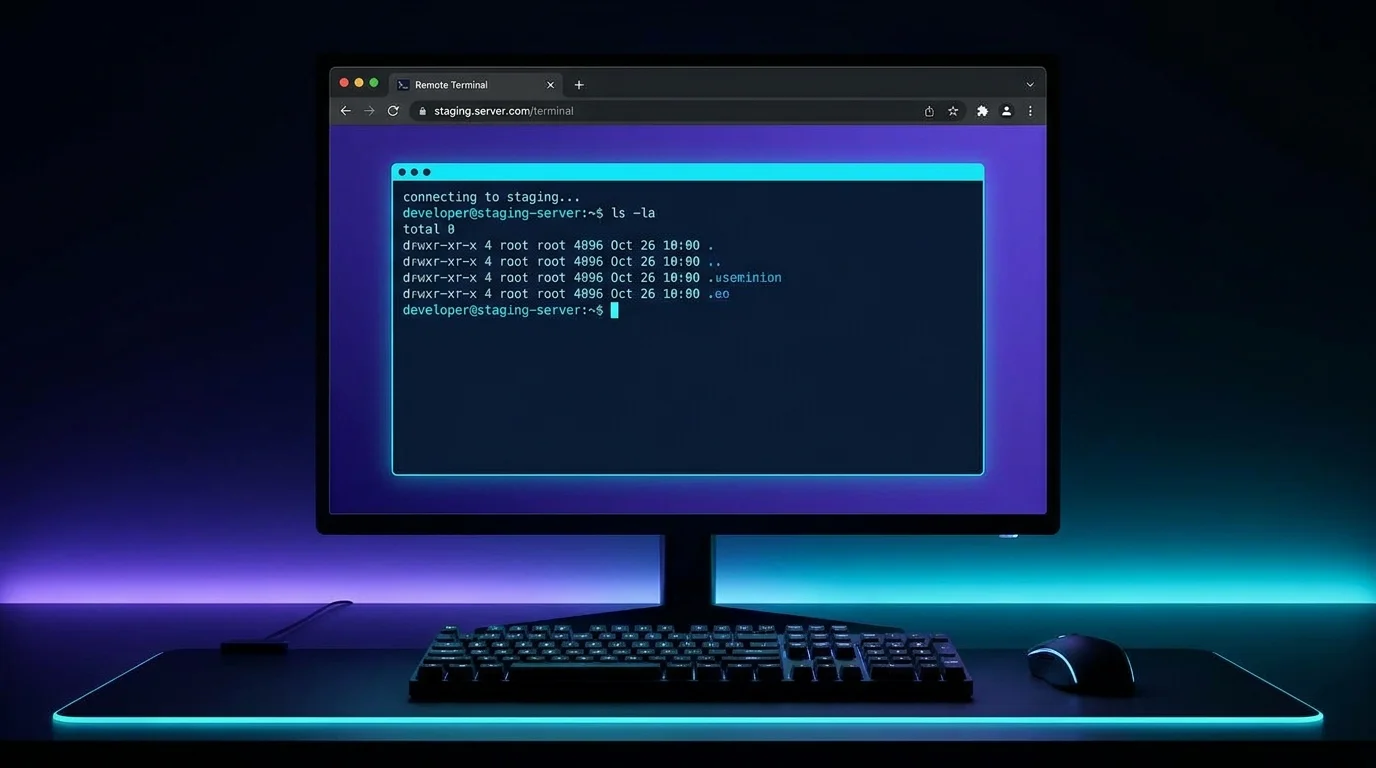
Full-stack, backend, and DevOps engineers who want a faster, more visual replacement for tmux + SSH + a wiki — one dashboard for every machine they develop on.
Development teams
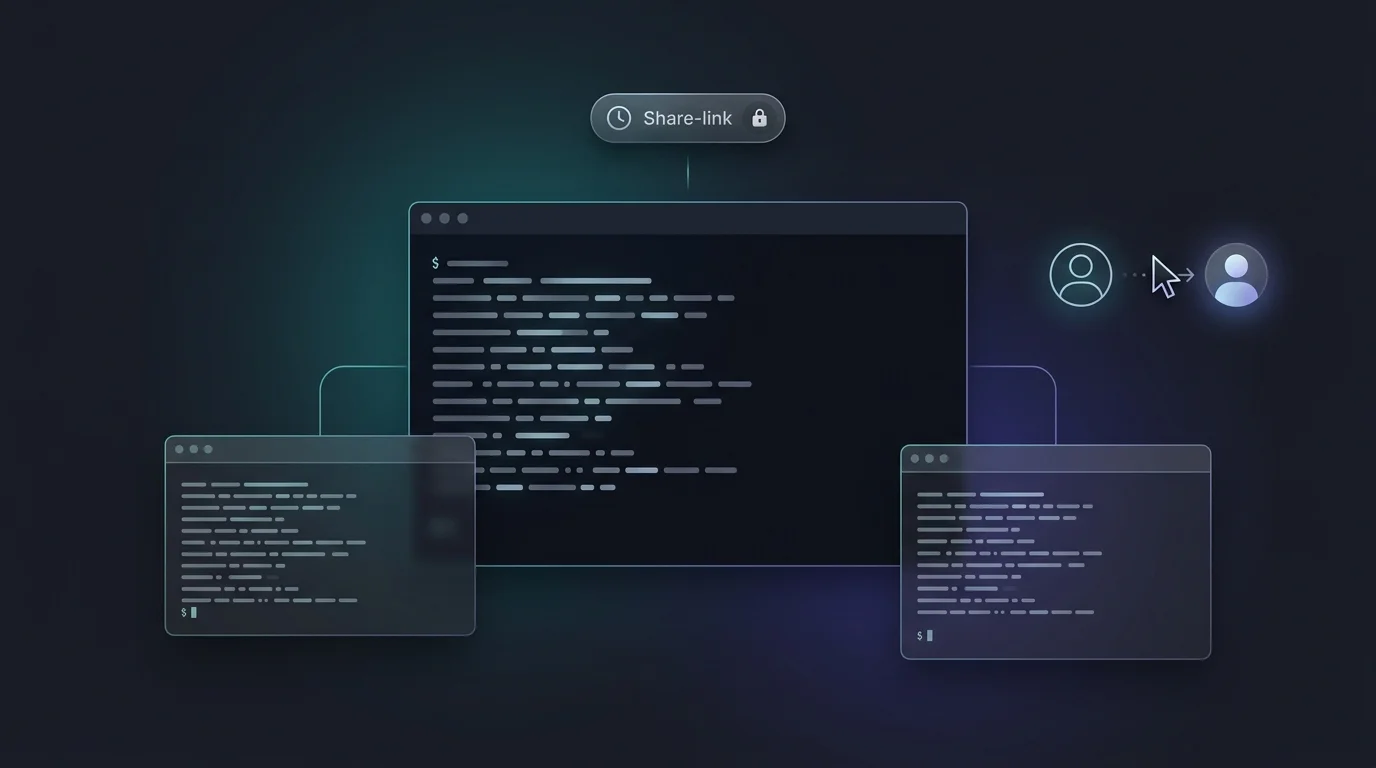
Teams that need shared environments, consistent onboarding, live session sharing, and operational visibility across the projects they run together.
DevOps & platform engineers
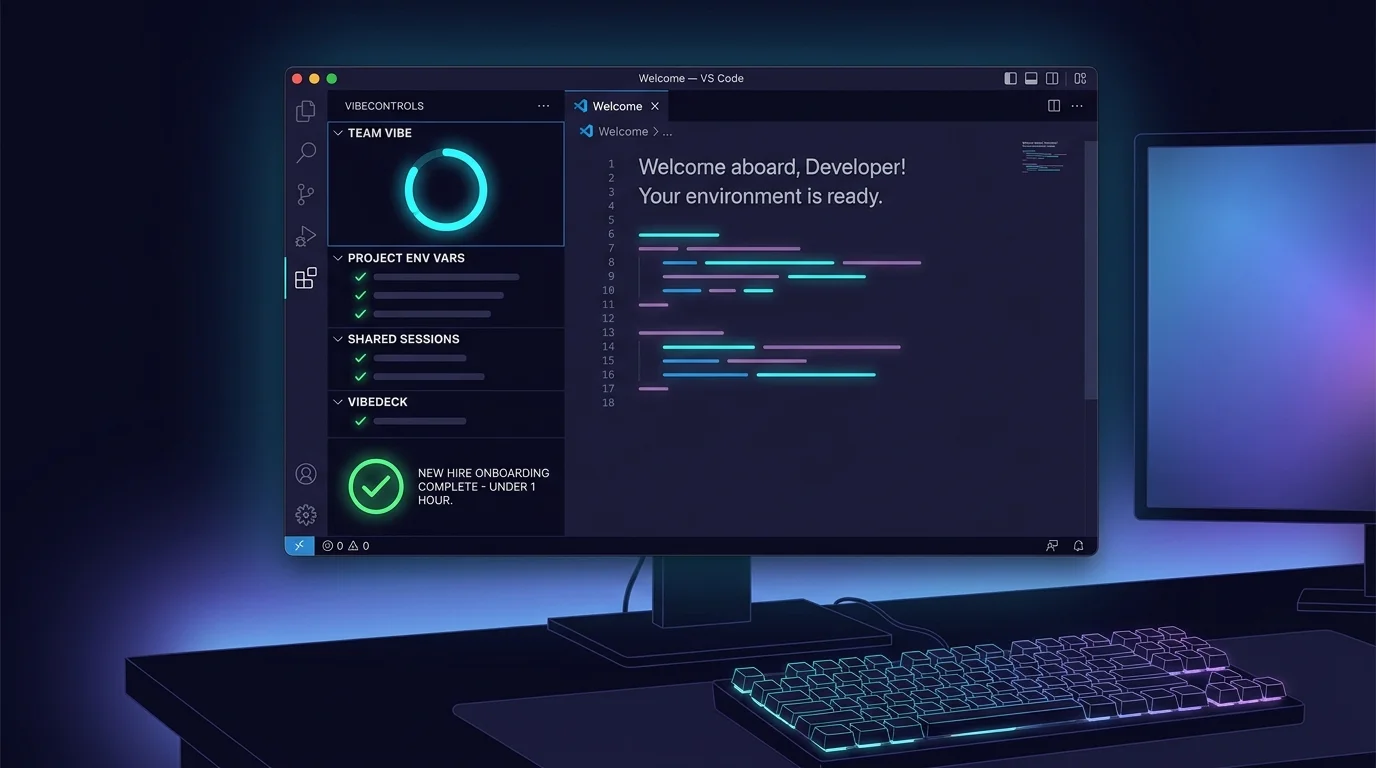
Teams managing fleets of staging, production, and customer servers with port-forwarding, scheduled tasks, runbooks, scorecards, and an emerging Internal Developer Platform.
Freelancers & consultants
Practitioners switching across many client projects and remote environments every week, who need clean separation and instant context per engagement.
Frequently asked questions
Conservative defaults throughout: AES-256-GCM at rest for agent-local storage and control-plane secrets, TLS/WSS in transit with tunnels terminating at the network edge, RBAC enforced at the gateway, per-agent rotatable credentials with no shared secrets between machines, and an immutable audit log of every mutation. The agent itself is open source so you can read it and pin releases.
No. VibeControls is BYOK by design — you bring your own API key or a local model (Ollama), you see exactly what each call costs, and your prompts never become someone else's training data. The platform routes across 16+ providers but never sits between you and your spend.
Not yet — SOC 2 and ISO 27001 are in flight, not held. The immutable audit log is built to be the evidence pipeline for those certifications, and SIEM streaming export is planned. We state this conservatively rather than claiming compliance we don't yet hold.
Yes, on Enterprise. By default every workspace is multi-tenant isolated; Enterprise adds dedicated single-tenant or fully self-hosted deployment, data residency, and customer-managed keys.
Yes. An MCP server exposes VibeControls to Claude Desktop, Claude Code, and any MCP-compatible agent, and there are CLI, VS Code, browser-extension, and Node/Python SDK surfaces. Every capability is reachable from every surface with the same workspace, identity, and audit trail.
A vibe is a project context — a workspace-scoped grouping of related work mapped to a folder on a target. It carries metadata (git remote, env vars, tags, notes, attached docs) and is where your sessions, scripts, schedules, documentation, and AI contexts live. Vibes can nest, be archived, and be shared with teammates.
Explore the rest of the suite
VibeControls works on its own — or as part of one AI-native stack.
Ready to try VibeControls?
Visit the product website to get started, or talk to our team about deploying it inside your organization.