Business Intelligence
BigConsole
AI-driven business intelligence dashboards without code.
Declarative JSON-based dashboard platform enabling non-technical users to ship role-specific BI dashboards with real-time data visualization, multi-source connectors, and AI-assisted layouts.

- 9Renderable widget types (18 schema-modeled)
- 10Industry-grounded flagship use cases
- 100%Operations carry RBAC enforcement
- 1 JSONPortable Console Definition per console
- 5Global filter types with cascade + URL sync
- ~33Backend test suites with strict typing
What is BigConsole?
BigConsole is an AI-assisted, multi-tenant Business Intelligence platform. It sits in the same category as Power BI, Tableau, and Looker - interactive dashboards over live business data - but approaches the job AI-first and definition-first. You describe the console you want in natural language, BigConsole generates an editable dashboard specification (pages, widgets, filters, and data bindings), and you refine it visually or with follow-up prompts.
Traditional BI puts an analyst, a semantic layer, weeks of training, and a license negotiation between the person with the question and the answer. BigConsole closes that gap with one workflow - prompt to spec to refine to materialize - and a deliberately layered model: every console is a declarative console definition (exportable, importable, diffable, Git-versionable), and data reaches widgets through one governed path. External systems feed keyed, cached, version-locked data sinks; readable JQ/JSONata Parsers shape the payloads; multi-stage Pipelines join across sources; and a real widget engine renders the result. Connectors are delegated to FluidGrids workflows by design, so BigConsole governs the cached, shaped data rather than re-building connector engineering.
BigConsole is pre-launch and ships as a workspace-scoped module of the Burdenoff platform, so authentication, RBAC enforced at the API gateway, workspace isolation, billing, audit, notifications, and i18n are inherited rather than rebuilt - every console is governed from the first prompt. The authoring and visualization layer is production-quality today; the live-ingestion, real-LLM, and alerting layers are a concentrated, well-understood roadmap. Capabilities are honestly status-tagged throughout - Available, In progress, or Planned.
Explore the capabilities
Click through what BigConsole does — each built and shipping inside the product.

And more
JQ / JSONata parsers with live test-runner
Reusable transforms that shape a sink's raw payload into widget-ready rows, authored in a standalone builder UI with a dry-run test query so you see input to output before committing. A parser is a readable expression anyone can inspect, not a buried ETL script.
Multi-stage pipelines
Processing chains that join and transform across sinks - each stage passes an input key to an output key with per-stage error handling (fail / skip / fallback), so one source going dark degrades a board instead of breaking it. This is how CRM x ERP x targets becomes one coherent dataset.
Real-time subscriptions and live wall-boards
Live data subscriptions power live wall-boards - widgets re-render within one refresh cycle of new data hitting a sink. Available today for data-plane events.
Sharing, templates, and JSON interchange
Share consoles with users or groups at VIEW or EDIT, set PRIVATE/WORKSPACE/PUBLIC visibility, and publish any console as a re-instantiable template - the rollout mechanism for the 'one definition, 40 locations' pattern. Export/import console definition for Git review and cross-workspace replay.
Drilldowns and widget actions
Strictly 1:1 widget drilldowns to a target console with a required parameter mapping and navigation mode, so cross-console navigation is explicit and auditable. Widgets can emit events to webhooks, and tables/metrics support conditional formatting.
Governance, security, and developer experience
Workspace isolation and RBAC enforced at the API gateway on every query and mutation (Available); field-masking at the storage boundary and per-viewer row-level security (In progress); audit via the platform activity service. Everything is backed by a unified API - anything the UI does, scripts and integrations can do too - with strict typing and comprehensive test coverage.
How it works
Connect your data into governed sinks
Land each source in a keyed, workspace-scoped data sink - fed by FluidGrids workflows that own connectors and schedules (push ingestion In progress), or by the manual ingestion endpoint and mock-data path available today.
Shape and join with parsers and pipelines
Author JQ/JSONata parsers and verify them against real payloads in the live test-runner, then join heterogeneous sources with a multi-stage pipeline (fail/skip/fallback per stage) into one analysis-ready dataset.
Prompt a console into existence
Describe the board in the Insights surface, review the analysis (intent, metrics, widget count), generate the spec, then refine - 'make the occupancy card a heatmap by unit' - and drag widgets in the preview.
Materialize, bind, and operate live
Turn the accepted spec into a live console, bind widgets to sinks via parsers, wall-board it so widgets update on new data, and cross-filter with cascading global filters and 1:1 drilldowns.
Govern, share, and scale out
Mask PII/PHI at the sink boundary and attach RLS for per-viewer rows (in progress), share VIEW with stakeholders and EDIT with co-owners, export the console definition to Git, and publish as a template to instantiate per trial, location, or client.
Who it's for
Real workflows BigConsole is built to support.
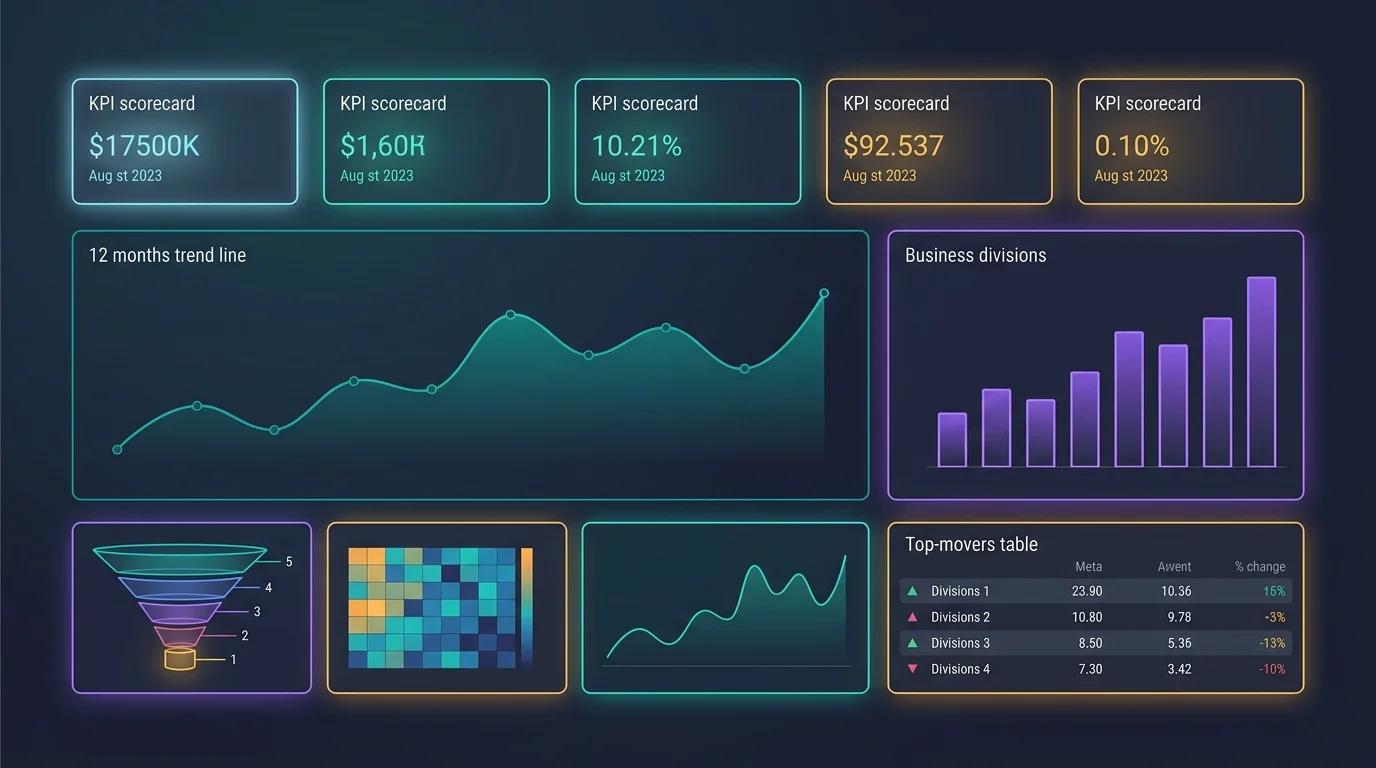
Founders, CEOs & executives
A board-ready cockpit of company KPIs - revenue, margin, cash, headcount on one live board - without commissioning a BI analyst. Run the Monday meeting from a single console.
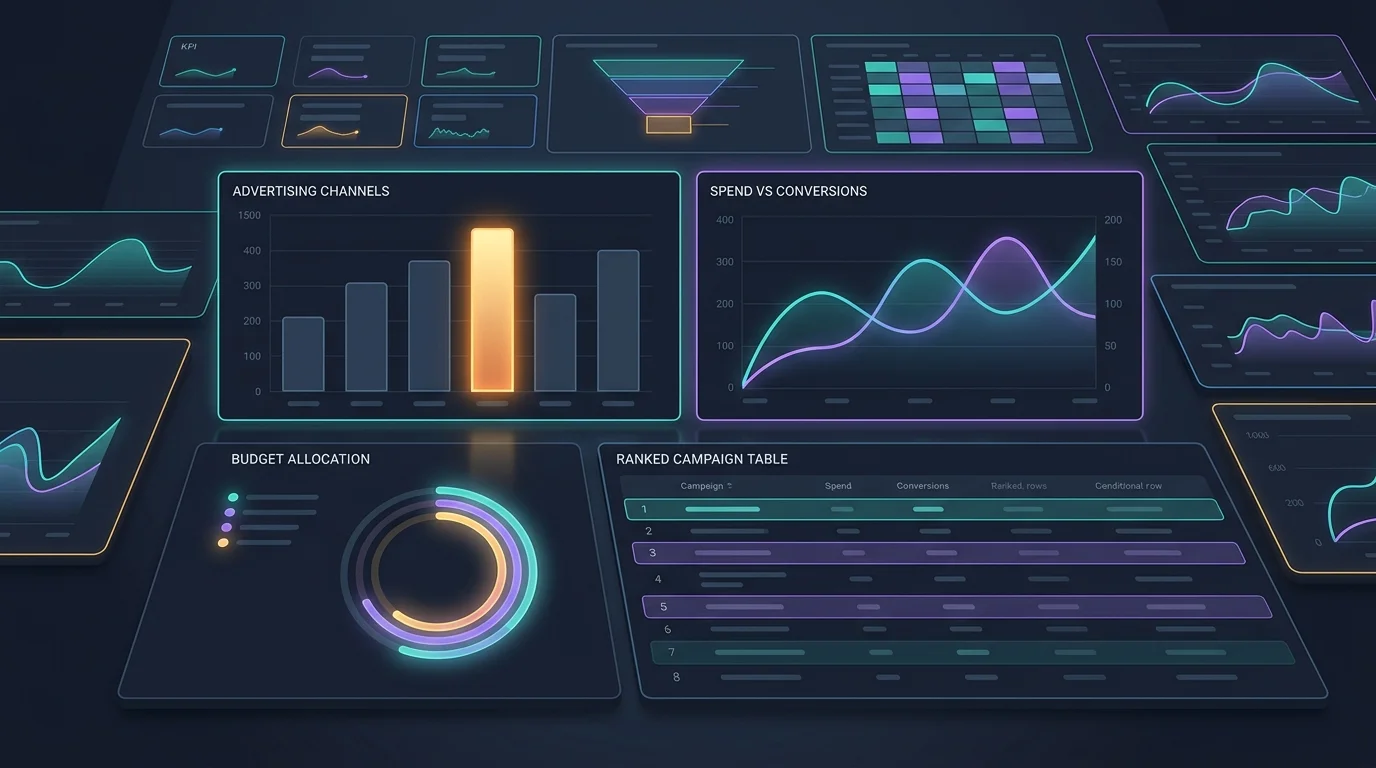
Finance teams
Budget-vs-actual, P&L, and cash-flow consoles with variance tables that flag over-budget rows - Git-auditable as JSON and maskable for review.
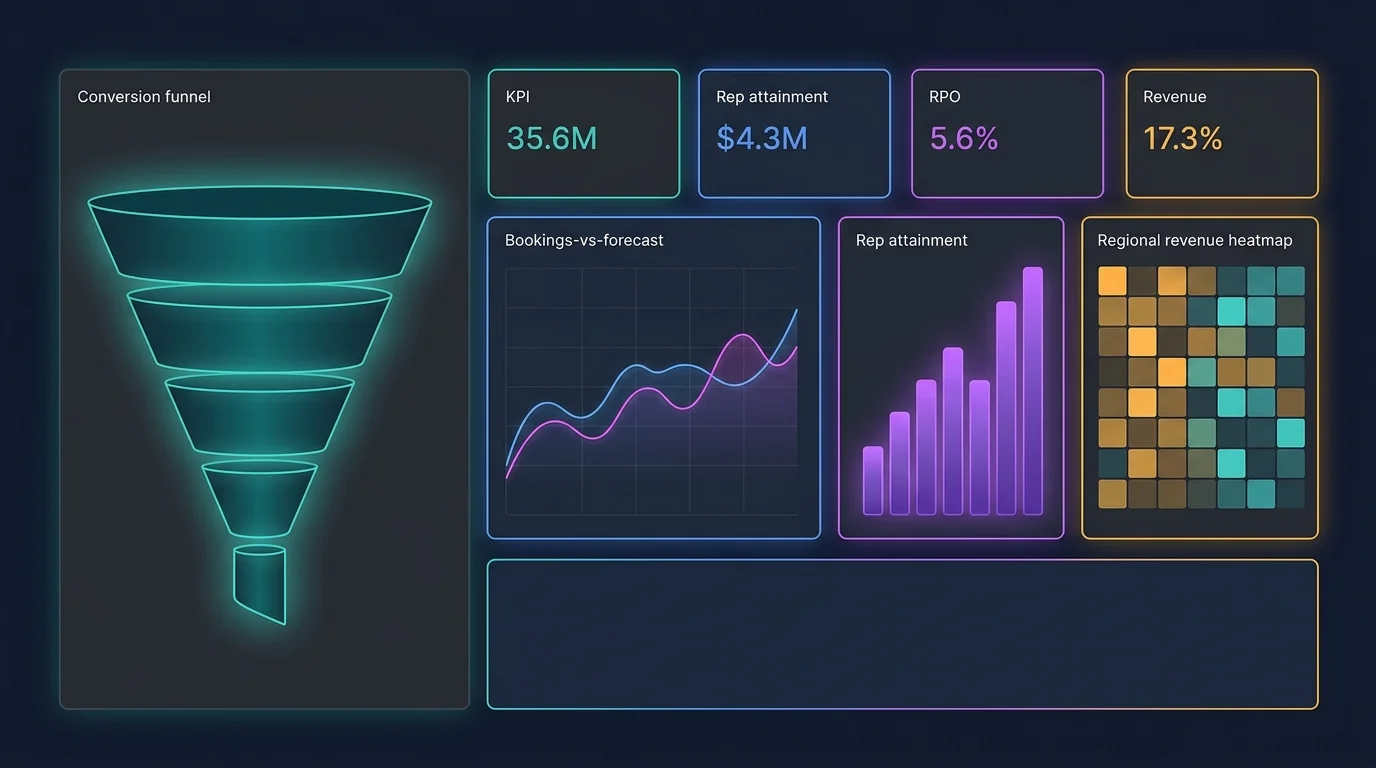
Operations leaders
Multi-location, multi-source operational boards across supply chain, manufacturing, restaurants, and logistics, with cascading filters and drilldowns - one template rolled out to many locations.
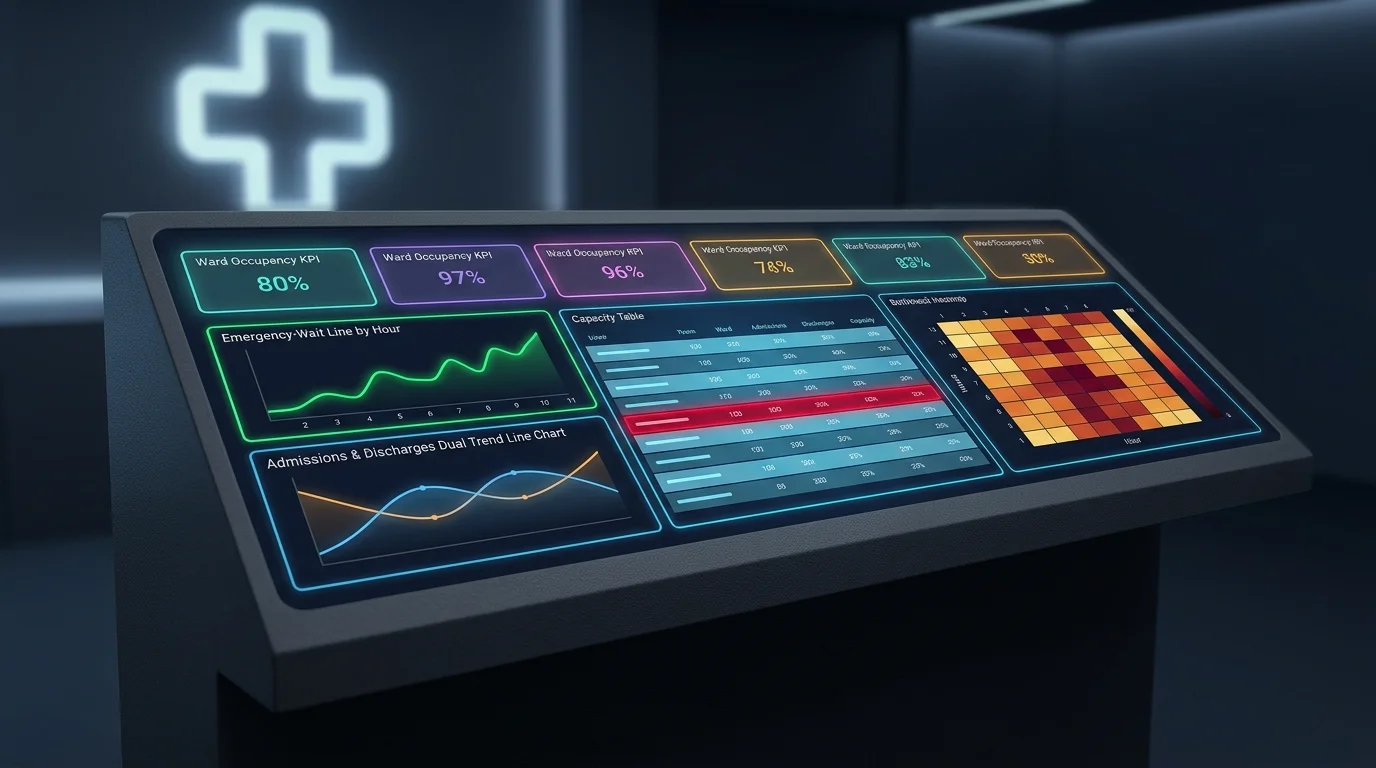
Healthcare & regulated-industry operators
Patient-flow and trial-operations command centers with PHI/PII field-masking models and live wall-board patterns - storage-boundary redaction is the compliance gate before production PHI use.
Frequently asked questions
Three things: it is AI-first (describe a dashboard in plain English instead of weeks of drag-and-drop training or DAX/SQL), it treats dashboards as code (a portable, Git-friendly console definition rather than a proprietary binary), and governance - RBAC, workspace isolation, scoped sharing - is built in on every plan. It is priced at roughly a third of Tableau per seat and is cloud- and source-agnostic.
No. You describe the console you want and BigConsole assembles it, then you refine visually or by follow-up prompts. Analytics engineers who want more control get readable JQ/JSONata parsers and a unified API - anything the UI does, scripts and integrations can do too.
BigConsole governs the cached, shaped data rather than re-building connectors. Source connectivity is delegated to FluidGrids workflows, which push normalized rows into keyed data sinks. Manual ingestion and mock data are available today; automated workflow push-ingestion and scheduled refresh are in progress.
The entire generation lifecycle - UI, schema, history, materialization - is available and working. The generation brain itself currently runs a deterministic keyword-matching mock generator that makes demos reproducible. A real multi-provider LLM router (OpenRouter / Anthropic / OpenAI with fallback) is implemented and being wired in; AI narrative analytics is planned on the same plumbing.
Yes. Every entity is workspace-scoped and every operation carries RBAC enforced at the API gateway; backend services never see raw tokens. Console exports carry sink references only - credentials are never serialized. Field masking and row-level security are in active development as the compliance gate before regulated PHI/SOX data flows through production sinks.
Live data subscriptions power wall-boards today, so consoles update within a refresh cycle of new data. Multi-user editing safety is currently optimistic version locking - concurrent writers conflict explicitly rather than merging. Google-Docs-style presence, live cursors, and CRDT co-editing are planned; comment threads are in progress via the platform conversations module.
Explore the rest of the suite
BigConsole works on its own — or as part of one AI-native stack.
Ready to try BigConsole?
Visit the product website to get started, or talk to our team about deploying it inside your organization.