Why Most AI Coding Agent Rollouts Stall — And How to Fix Adoption
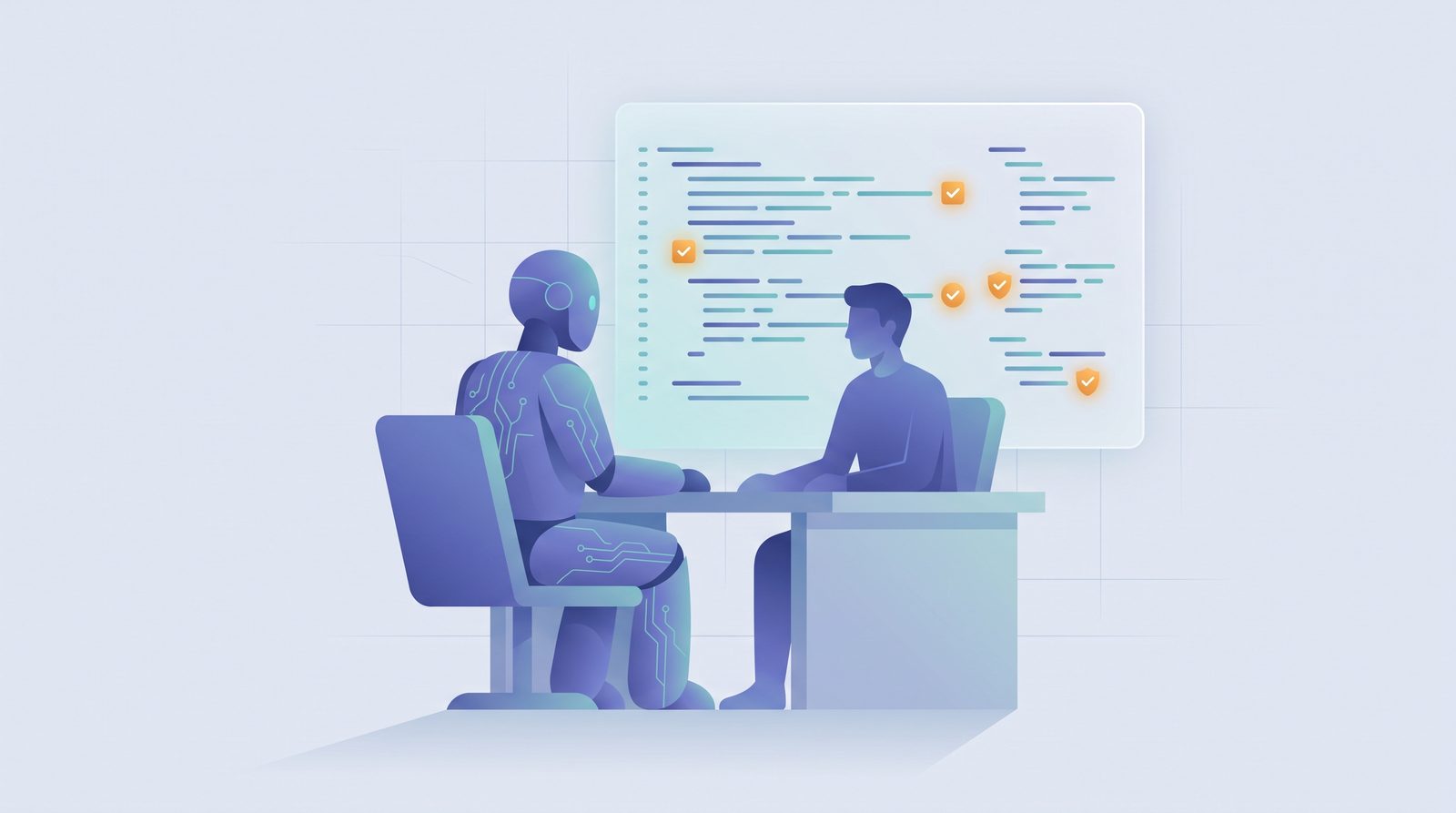
Ask ten engineering leaders whether their team uses AI coding agents, and most will say yes. Ask how many of their developers get consistent, trustworthy results from those agents, and the room goes quiet. That gap — between "we're using AI agents" and "AI agents are a reliable part of how we ship software" — is the single biggest problem we see when we start working with an engineering organization.
It's not a tooling problem. The models are good enough. It's an adoption and governance problem, and it's solvable with the same discipline engineering teams already apply to everything else they ship.
The enthusiasm-to-trust gap is real, and it's widening
Enterprise appetite for AI agents is not in question. In Cloudera's 2025 survey of nearly 1,500 enterprise IT leaders across 14 countries, 96% said they planned to expand their use of AI agents over the next year, with development assistants named as one of the most common use cases. That is about as close to universal agreement as enterprise technology ever gets.
But adoption intent and adoption maturity are two different things. Most organizations we talk to are stuck in the same messy middle: a handful of engineers who've figured out how to get real leverage from AI coding agents, a much larger group getting inconsistent or disappointing results, and a leadership team that can't tell whether the spend on tooling and time is actually paying off. Nobody has bad intentions here — the problem is structural. Agents got wired into real codebases and real production systems with no evals, no guardrails, and no observability, so nobody trusts them with anything that actually matters.
That leaves organizations with one of two bad outcomes. Either shadow usage creeps in — engineers running agents against production systems with scopes and permissions nobody signed off on — or leadership responds to the risk with blanket caution, and the productivity gains stay firmly on the table, unclaimed.
Why "just give everyone Copilot" doesn't work
It's tempting to treat AI coding agent rollout like a license purchase: buy the seats, send a Slack announcement, watch productivity rise. It doesn't work that way, for the same reason "just give everyone a CI/CD pipeline" wouldn't have worked in 2015 without also building the pipeline, the tests, and the culture that made continuous delivery trustworthy.
Three things tend to break when agent rollout is treated as a tooling decision instead of an engineering change:
There's no shared definition of "good." Without an evaluation harness — task suites, scoring, regression checks — two engineers using the same agent on similar work can get wildly different outcomes, and nobody can say whether that's the agent, the prompt, the codebase, or the person. Quality becomes a matter of opinion instead of a measured property of the system.
Permissions are all-or-nothing. An agent that can read a file can usually also write to it, run arbitrary commands, or touch a database — unless someone has deliberately scoped what it's allowed to do and where a human needs to approve the next step. Without that scoping, teams default to letting agents touch almost nothing (killing the value) or almost everything (creating real risk).
Leadership is flying blind. If agent usage isn't instrumented — which teams are using it, on what kinds of work, with what outcomes, at what cost — then conversations about expanding or constraining the program happen on vibes instead of data. That's a hard position to defend when someone asks for the ROI.
None of these are AI-specific problems. They're the same category of problem every new engineering capability creates until someone builds the guardrails around it — CI/CD needed automated tests before anyone trusted it to ship to production unattended, and cloud infrastructure needed observability before anyone trusted it to scale itself. AI coding agents need the equivalent discipline before they earn a place in the critical path.
Treat agentic engineering as an org change, not a tool install
The rollouts that actually work start from a different premise: agentic engineering is an organizational capability you build, not a product you switch on. That means auditing where in your software development lifecycle agents genuinely create leverage — and where they introduce risk you're not ready to accept — before you scale anything.
A readiness assessment worth doing looks at your SDLC, your codebases, and your security posture together, and comes back with a prioritized list of use cases, the guardrails each one needs, and clear success criteria. Some workflows are low-risk and high-value from day one — generating test coverage for well-understood code, drafting documentation, doing a first pass on a routine refactor. Others — anything touching production data, customer-facing systems, or irreversible actions — need much more scaffolding before an agent should be anywhere near them. Knowing the difference up front is what keeps a pilot from becoming a postmortem.
Start with one workflow, not everything at once
The instinct to roll agents out everywhere simultaneously is understandable — and it's usually a mistake. A focused pilot on one or two concrete workflows (test generation, a specific class of refactor, code-review assistance, or a purpose-built internal agent) does two things a broad rollout can't: it proves the workflow actually saves time on real work, and it proves trust, because evals and guardrails are built in from day one rather than retrofitted after something goes wrong.
The pilot phase is also where you define what success looks like before you're emotionally invested in a particular answer. That discipline pays off later when someone — rightly — asks for evidence instead of anecdotes.
Build the evaluation harness before you scale
This is the step most rollouts skip, and it's the one that determines whether the next twelve months look like steady expansion or a slow loss of confidence. An evaluation harness — task suites that represent real work, scoring criteria, and regression checks that run automatically — turns "the agent seems pretty good" into a number you can track over time, across models, and across prompt or workflow changes.
Guardrails belong in the same phase: scoped permissions so an agent can only touch what it's supposed to, human-in-the-loop gates for anything consequential, and review or approval checkpoints that mirror the code review your team already trusts. None of this is exotic — it's the same access-control and review discipline engineering teams apply to human contributors, applied consistently to a new kind of contributor.
Make agent activity visible to the people funding it
Observability is often treated as optional, and it's the thing leadership asks for first once the pilot proves the workflow works. Dashboards that show agent activity, cost, and outcomes — not "we think it's helping" but actual usage and actual results — are what let a leadership team make an informed decision about whether to expand the program, and to which teams next.
Roll out deliberately, then hand off
Once a pilot has proven both value and trust, expansion means setting prompting and workflow standards so results don't vary wildly by individual, integrating agents into CI and existing developer tooling rather than asking engineers to leave their normal workflow, and running real, hands-on enablement — not a one-time announcement. The rollout should end with documentation, runbooks, and an internal champion who can operate and extend the system, so the program doesn't depend on whoever set it up originally still being in the room a year later.
What good looks like on the other side
Organizations that go through this deliberately end up somewhere very different from where blanket tool access would have taken them. AI coding agents get adopted consistently across teams instead of staying a productivity trick a few enthusiasts use. Engineering leaders can see agent quality, cost, and impact instead of relying on anecdotes in a retro. Repetitive work — test writing, boilerplate, routine migrations, a first pass on code review — genuinely moves off developers' plates, freeing time for the problems that need human judgment. And because guardrails and evals were there from the start, the risk of a low-quality or unsafe agent-driven change reaching production stays low even as usage grows.
Just as importantly, the org ends up owning something reusable: a foundation of agents, workflows, evals, and observability that extends to the next use case instead of starting from zero every time someone wants to try something new.
The bar keeps rising — start building the muscle now
The 96% expansion figure from Cloudera's survey is a signal worth taking seriously: this isn't a trend that's going to plateau while everyone catches their breath. Organizations that build the evaluation, guardrail, and observability muscle now will be the ones who can adopt each new generation of coding agents quickly and safely, while everyone else re-litigates the same trust questions from scratch every time a better model ships.
The good news is that none of this requires boiling the ocean. A focused readiness assessment and a well-instrumented pilot on one real workflow will tell you more about what's actually possible in your organization than another six months of ad hoc, ungoverned experimentation ever could.
If your team is somewhere in that messy middle — real usage, inconsistent results, and no good answer when someone asks what it's actually delivering — talk to us about what a readiness assessment and pilot would look like for your engineering org, or read more about how our Agentic Engineering Consulting engagements are structured.